The Most Powerful Man in AI Admitted He Was Unfaithful to His Wife — And Now His Own Board Has Opened a Spy Investigation
Jensen Huang’s Sunday apology to Nvidia staff came days after reports that U.S. intelligence believes a Chinese executive close to him was working for Beijing. What officials knew — and how long they knew it — is the part that has Washington talking.
8 November 2026 · 6 min read
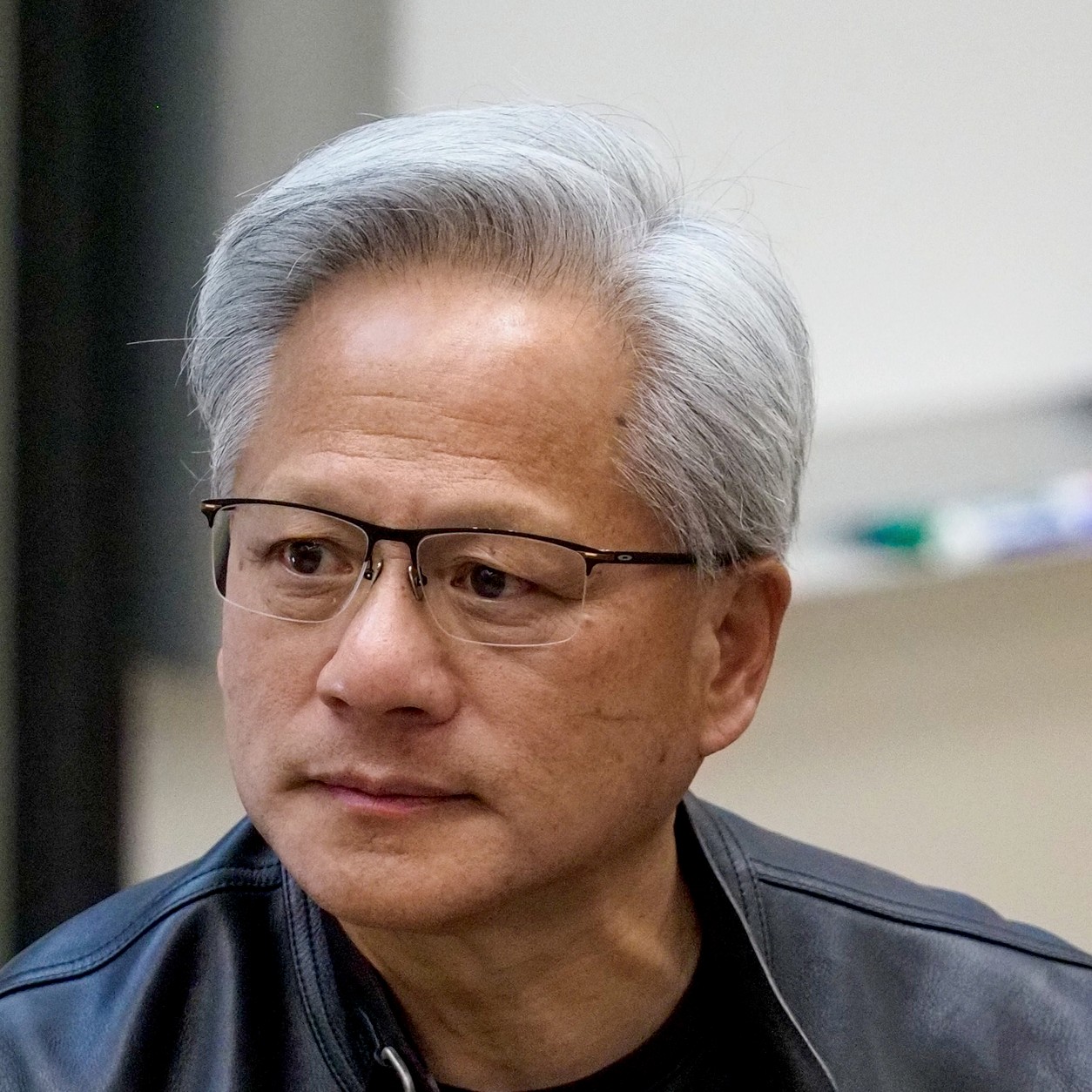
The email reached Nvidia employees on Sunday, and it did not read like anything a $4.5 trillion company usually sends its staff. There were no product names, no earnings figures, no talk of chips. The first line was just ten words long.
“I owe my family and all of you an apology.”
Jensen Huang, the leather-jacketed co-founder who turned Nvidia into the engine of the AI boom, then wrote something few chief executives ever put on paper. “I was unfaithful to my wife,” he told the company. “My actions hurt her and our children. There is no excuse for what I did. I am deeply sorry.”
On its own, that would be a private scandal with a famous name attached. But the same day, Nvidia’s board announced an independent investigation — and it had nothing to do with marriage. The question was whether the most important man in the AI chip business had been the target of a foreign spy.
The Confession Nobody Expected
Huang, 63, is not an ordinary tech boss. Nvidia was the world’s second-largest publicly traded company as of Friday, worth nearly $4.5 trillion, NBC News reported, and Huang’s fortune has climbed to almost $160 billion, making him the 10th-richest person on Earth according to the Bloomberg Billionaires Index. In October, President Donald Trump awarded him the National Medal of Science.
His letter was raw by corporate standards. “They deserve my honesty and loyalty,” he wrote of his family. “Instead, I let them down and damaged the life we built together.”
Then he turned to his workforce. “Leading NVIDIA is the privilege of my life,” he wrote. “I have fallen short of that responsibility.” Only near the end did the letter touch the subject that had pushed it into the open. “Regarding the national security concerns raised in news reports,” Huang wrote, “NVIDIA’s Board of Directors has initiated an independent investigation. I support the investigation and will cooperate fully.”
The Woman at the Center of the Reports
The woman in those reports is Alice Huang — no relation — a Chinese citizen who was a senior executive at Megaspeed, a Singapore-based data center company and Nvidia customer.
The New York Times first reported on Oct. 29 that U.S. officials believed she was passing information to Beijing. According to the Times, American intelligence had her under electronic surveillance, and that surveillance revealed a close relationship with a U.S. citizen. When officials asked for the American’s name to be “unmasked,” it turned out to be the Nvidia chief. The Times reported that Trump was briefed roughly a year ago and chose not to take action.
On Friday, the Times and the Financial Times went further. U.S. intelligence, the papers reported, had concluded that Alice Huang was recruited by China’s Ministry of State Security, Beijing’s top spy agency, and the FT reported that officials believed the two had been romantically involved. The aim, the Times reported, was to learn more about American AI chips and to push for Nvidia’s most advanced processors to be made available in China.
Megaspeed was already under a cloud. Despite having “essentially a storefront office,” the Times reported, it bought some $2 billion worth of Nvidia products for Southeast Asian data centers that rent computing power to Chinese giant Alibaba. The Commerce Department is investigating whether it smuggled restricted chips into China, The Verge reported.
Before the board went public, according to the Times, Huang acknowledged to its members that he had been intimate with the executive. His letter to staff does not name her.
“Completely Normal and Not Unusual”
That is a sharp turn from what Huang and his company said only weeks ago.
In a recent statement, Huang described his dealings with Alice Huang as strictly business. “Our relationship, our interactions, have been related to Megaspeed, and it was all completely normal and not unusual,” he said, as quoted by NBC News. Nvidia said customers like Megaspeed never receive classified business information, and when the FT asked about the romance on Friday, the company said Huang meets “thousands of customer executives every year.”
The two were photographed together with other industry executives at a bar in Taipei in 2024, the Times reported — around the same time Megaspeed began a multibillion-dollar purchase of advanced Nvidia chips. Alice Huang has not responded to requests for comment.
China has rejected the reporting. Liu Chang, a Chinese embassy spokesperson in Washington, called it “unsubstantiated” and “nothing but smears against China,” according to Singapore’s Lianhe Zaobao. NBC News said it had not independently confirmed the spy reports.
The Memo Before the China Trip
The second turn came on Sunday, and it pointed straight at the White House.
According to the Times, Secretary of State Marco Rubio oversaw the drafting of a highly classified memo this spring warning top Trump administration officials that Huang was in a close relationship with a Chinese spy. It circulated among officials with high-level clearances ahead of Trump’s trip to China in May.
Huang was initially left off the list of executives invited on that trip, the Times reported, though it is unclear whether that was linked to the memo. After Trump saw news coverage of the snub, the president asked Huang to meet Air Force One during a layover in Alaska — and drafted a post praising “the Great Jensen Huang.”
Asked about it Sunday in Florida, Rubio gave nothing away. “I just can’t comment because of the nature of it,” he told reporters, “and I also can’t comment on an internal corporate matter that’s going on with Nvidia.” The White House and State Department declined to comment to the Times.
Peter Mattis, a former CIA counterintelligence analyst quoted by the Times, put the stakes plainly: “Jensen is someone you’d want to influence because he wields a lot of power and is at the crux of a world-shaping technology.”
What Happens Next
Congress is already moving. Three House Republican committee chairs wrote to Huang last week asking him to attend a closed-door briefing on Nov. 18. “It is vital that Congress determines the extent to which U.S. national security has been placed at risk,” the letter said. Sen. Chris Coons of Delaware, who is in line to chair the Senate Foreign Relations Committee when Democrats take control in January, wrote on X: “Congress will investigate and get answers.”
The timing could hardly be worse. Nvidia reports third-quarter earnings on Nov. 17 — one day before that briefing — and is due to host a major conference in Washington at the end of the month.
The board says it has “no reason to believe that either national security or NVIDIA secrets were compromised” and still has confidence in Huang. The company insists he is going nowhere. “Today’s news will not slow NVIDIA,” a spokesperson said. “Jensen is committed to continuing to lead NVIDIA as CEO without interruption.”
But the last lines of his letter were not about chips, Washington or Beijing. They were about the family he had just apologized to in front of his entire company.
“My family bears no responsibility for my choices,” Huang wrote. “I do. Please give them privacy.”
Marta Visser
Consumer editor
Marta has covered retail pricing and consumer rights for nine years and runs our basket-tracking tests.
One email a week. Every deal, checked.
No spam, no filler. Just the prices, recalls and stories that affect your week.