Gavin Newsom Just Moved to Spare Every California Death Row Inmate — and the Families of the Murdered Are Already Torn Apart
All 548 death sentences are headed for life without parole in what experts call the largest mass clemency in U.S. history. He waited until after Election Day — and nearly 400 of the cases still need the state Supreme Court.
5 November 2026 · 6 min read
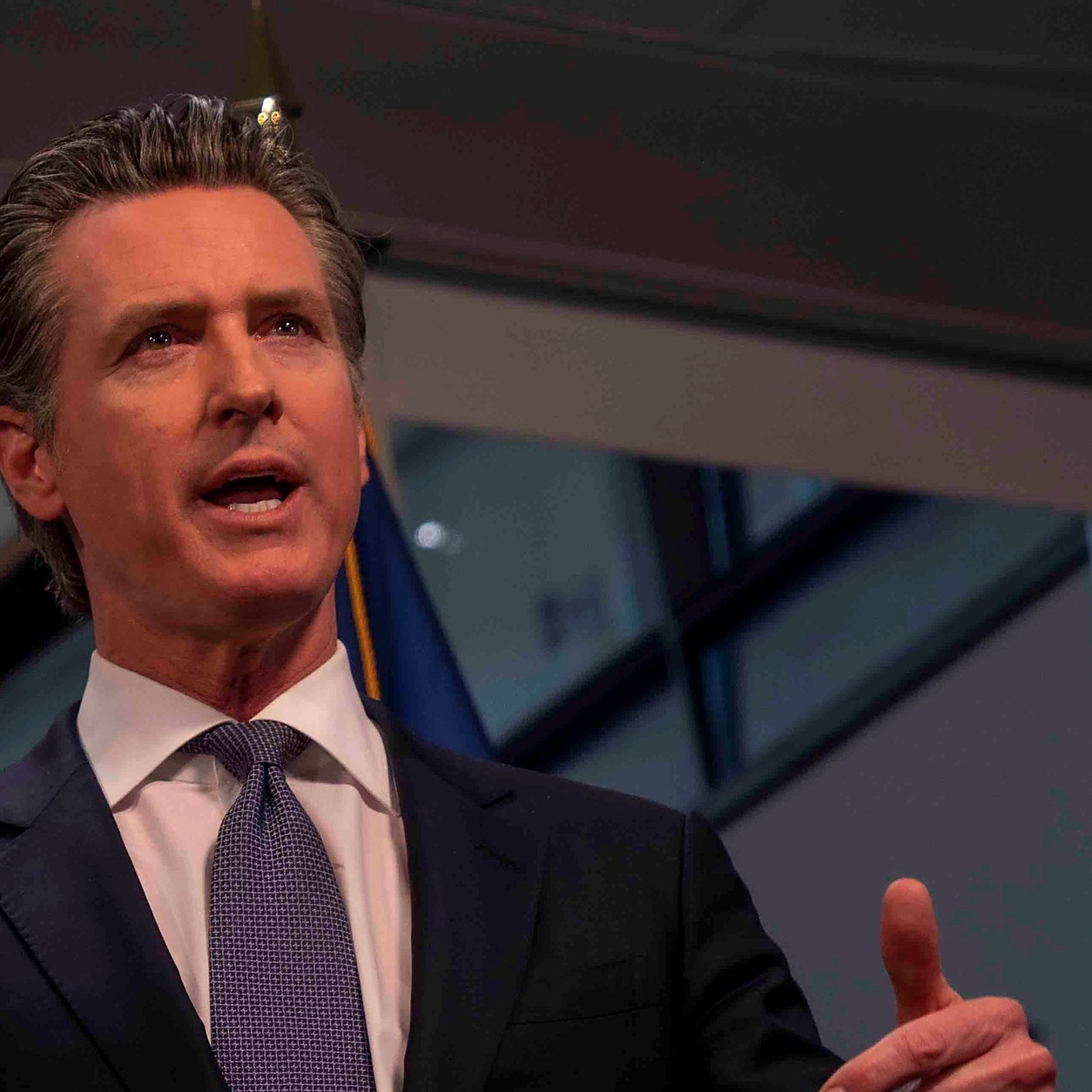
The letter went out under the seal of the Governor of California on Thursday, addressed simply “to all Californians.”
Buried near the middle was the line that will define Gavin Newsom’s final months in office: “These offenders will die in prison but not by our hand.”
By the time the last page landed, every one of the state’s 548 death sentences was on a path to life without the possibility of parole — what the Death Penalty Information Center calls the largest mass clemency in United States history. The condemned now in line, CalMatters reported, make up more than a quarter of the nation’s entire death row.
It empties California’s death row on paper. It has also torn open the state’s oldest wounds — and Newsom, the Los Angeles Times reported, deliberately held it until after Tuesday’s midterm election.
The Number That Took Decades to Reach
California has not put anyone to death since Clarence Ray Allen in 2006. Tookie Williams went the year before. Since voters reinstated capital punishment in 1978, the state has executed only 13 people, the BBC and the Los Angeles Times reported.
In 2019, two months into his first term, Newsom ordered a moratorium on executions and vowed to dismantle the death chamber at San Quentin. By about 2024, “death row” in California had become a metaphor: the men were scattered across 24 prisons, CalMatters reported, and roughly 20 condemned women were moved into the general population at the Central California Women’s Facility.
Thursday went further. Newsom is using his constitutional clemency power to commute all 548 sentences — about 529 men and 19 women, the Los Angeles Times reported — to life without parole.
“I take this action because I firmly believe that state-sanctioned killing is incompatible with California’s values, undermines the foundations of our legal system and diminishes each of us,” he wrote.
He considered commuting only some of them. That, he wrote, would have created “two classes of murder victims.” So he chose all of them — and said he alone bears the responsibility.
What One Murder Left a Family Unable to Agree On
Among the inmates in line are names that still stop people cold: Richard Allen Davis, who kidnapped and killed 12-year-old Polly Klaas in Petaluma in 1993; Charles Ng, convicted in the Sierra foothills killings of the 1980s; Scott Peterson, convicted of murdering his wife, Laci; and Christopher Cheary, convicted in the rape, torture and murder of 3-year-old Sophia Acosta.
Polly Klaas’s family split in public within hours.
Her father, Marc Klaas, told CalMatters before the decision that the prospect of the commutations “upsets me terribly.” He had already given up hope that Davis would ever be executed. What he still believed was that Davis and the others would remain on death row for life. “It’s so discouraging. It makes me feel terrible and it regurgitates all my personal feelings.”
Polly’s sister, Jess Nichol, landed somewhere else entirely. “The system tells survivors that execution matters to our healing,” she said, according to the Los Angeles Times. “It doesn’t. It’s a distraction from what we actually need.”
Sandy Friend, whose 8-year-old son Michael Lyons was abducted, raped and murdered in 1996, called the move “total disrespect” and “a slap in the face.” Phyllis Loya, whose son, Pittsburg police officer Larry Lasater, was killed in the line of duty, said Newsom “has a heart for criminals, I don’t think he has a heart for victims.”
Bethany Webb, whose sister Laura was among eight people killed in the 2011 Seal Beach mass shooting, has long argued the opposite — that the death penalty is a false promise sold to people who are angry and broken.
Anne Marie Schubert of the Criminal Justice Legal Foundation called the commutations “the most grotesque violation of victims’ rights” she had ever seen, the Los Angeles Times and CalMatters reported, and said families were not notified. Her group plans to challenge the move in the state Supreme Court. Topo Padilla of Crime Victims United argued that no governor should undo a jury and a judge for personal belief.
The ACLU’s Anthony D. Romero applauded. The punishment, he said, is “racist, error-prone, and inhumane.” Los Angeles County District Attorney Nathan Hochman answered from another angle: Newsom can commute, but only the legislature or the voters can eliminate the death penalty — and Californians have kept it twice.
The Catch Waiting for Four Justices
Here is the part that does not fit on a protest sign.
Newsom can commute about 40 percent of the sentences with a pen, the Los Angeles Times reported. The rest — nearly 60 percent, nearly 400 people with prior felonies, according to CalMatters — need four of the seven justices on the California Supreme Court to approve before his term ends in January.
Death-penalty appeals already soak up more than $200 million a year in California, according to a 2025 Habeas Corpus Resource Center report cited by the Los Angeles Times — about a quarter of the high court’s work. The court rejected 10 clemency cases from Gov. Jerry Brown in 2018. This time the pile is vastly larger.
Newsom is term-limited. Gov.-elect Xavier Becerra, projected to take over after Tuesday’s midterms, also opposes the death penalty. Restarting executions, experts told the Times, would take years and millions of dollars — a new chamber, a workable protocol, drugs that are hard to get.
An August Pew poll found about two-thirds of U.S. voters still favor the death penalty for murder. California voters rejected abolition about a decade ago and instead approved speeding up executions. Newsom wrote that he respects that vote — and that the Constitution also gave every governor clemency for moments when “law as applied cannot be squared with justice.”
“For me,” he wrote, “this is that moment.”
The Friend Who Escaped Death by One Vote
There is a quieter story under the politics.
Newsom has said his Catholic upbringing shaped him. His late father, William Newsom, opposed the death penalty. The family was tied to the case of Pete Pianezzi, a friend wrongfully convicted of first-degree murder in Los Angeles in 1937. Pianezzi escaped execution by a single vote, served 13 years, and was later exonerated, the Los Angeles Times reported.
That history sat behind Thursday’s letter. So did the botched lethal injection of Christa Pike in Tennessee in late September, and the three executions scheduled around the announcement in Indiana, Florida and Alabama, the BBC noted.
Newsom waited until after Election Day on purpose, the Times reported — careful not to drag capital punishment into the midterm fight. He is winding down. He is also being discussed as a possible 2028 presidential contender. A Republican consultant told the Times the move thrills the Democratic base and risks moderates later. Newsom’s letter never mentioned 2028. It mentioned conscience.
“We can now let these offenders die in obscurity while we forever remember and honour the victims,” he wrote.
On Thursday, that was the bargain he offered California: the killers stay locked away forever, the state puts down the syringe, and the families of the dead are left to decide whether that is mercy — or another wound.
Marta Visser
Consumer editor
Marta has covered retail pricing and consumer rights for nine years and runs our basket-tracking tests.
One email a week. Every deal, checked.
No spam, no filler. Just the prices, recalls and stories that affect your week.