
Scientists Catalog These Rare Whales One by One — Yet a 38-Year-Old Mother Hid Her 15,000-Pound Baby From Them for Months
Survey planes and boats watched the U.S. coast all winter, spring and summer and never saw it. Then a research crew in Canada raised their cameras — and the whale they recognized had a secret swimming beside her, and a family story that explains why scientists are so thrilled.
9 November 2026 · 5 min read
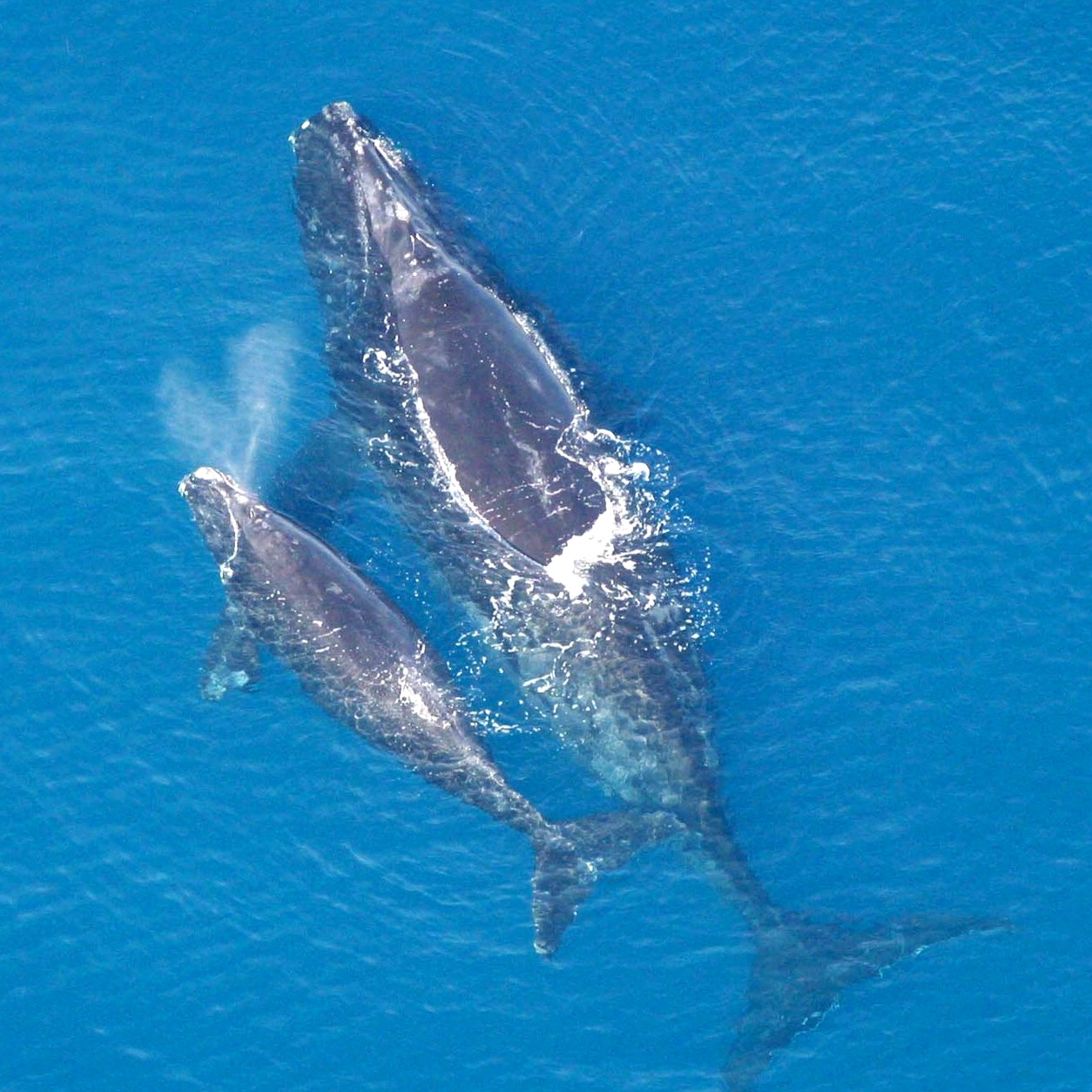
On September 25, a research crew from the Mingan Island Cetacean Study was working the cold water of the Jacques-Cartier Passage, off Quebec’s Anticosti Island, when a North Atlantic right whale rolled up to the surface. The team did what researchers always do with this species. They lifted their cameras and photographed her.
Then they saw she was not alone.
Swimming at her side was a calf — a baby that, as far as the scientists who track these whales knew, did not exist. Nobody had logged its birth. Nobody had seen it in winter, spring or summer. And this is not a species anyone takes their eyes off: right whales are so rare that researchers catalog them one animal at a time.
“It would seem difficult to miss a 15,000-pound baby,” the Associated Press wrote last week, “but for months scientists who study rare whales did just that, and now they couldn’t be happier.”
The Whales Nobody Is Allowed to Lose
There are only about 380 North Atlantic right whales left, according to NOAA Fisheries, and only about 70 of them are breeding-age females. Every identified whale gets a four-digit number in the North Atlantic Right Whale Catalog, a photo-identification database run by scientists at the New England Aquarium in Boston.
Each winter, survey planes and boats work the coast from North Carolina to Florida — the only place these whales are known to regularly give birth. Teams from Florida and Georgia wildlife agencies, the Clearwater Marine Aquarium Research Institute and federal agencies spend the season watching for new mothers and calves.
So the photos from Quebec set off weeks of detective work. Aquarium scientists compared the images with sighting data and their catalog, and the answer they came back with was a whale they knew very well.
A Mother Who Slipped Away
She was catalog #1817, known as “Silt.” First seen in 1988, she is at least 38 years old, and NOAA says she is named for the low markings on her head that shift in appearance “like sands or silt in water.”
Silt had been spotted this year — exactly once. On February 2, a Clearwater Marine Aquarium survey plane photographed her about 35 miles east of Beaufort, South Carolina, right in the calving grounds. There was no baby beside her. Then she disappeared from the records until September.
“Silt was briefly seen in the southeastern U.S. calving grounds in February 2026, so it’s possible she had the calf there but snuck away before they were documented together,” said Amy Warren, a scientist at the aquarium’s Anderson Cabot Center for Ocean Life. “This is an exciting discovery for us so late in the year.”
The pair went on to slip past boat and aerial surveys up the East Coast all spring and summer, the aquarium said. Even NOAA’s own write-up sounds a little impressed: “The pair also evaded monitoring efforts along the East Coast throughout the spring and summer!”
Richard Sears, founder of the Mingan Island Cetacean Study, saw a simple lesson in it. “It just goes to show you how big the ocean is, and how those animals can get lost out there,” he told the AP.
Why One Baby Changes the Count
The celebration is not just sentiment. Silt’s calf is the 24th from the 2025–26 season, which the AP called the most productive year for the whales since 2009 and the fourth-highest count on record.
For this species, every number counts. Right whales lost about a quarter of their population between 2010 and 2020, and in 2018 not a single calf was born, the AP reported. NOAA says more right whales have died than have been born over the last decade, mostly from ship strikes and entanglement in fishing gear. With so few breeding females, the agency calls 20 newborns in a season a relatively productive year.
Silt knows those dangers firsthand. She has been tangled in fishing gear at least five times, the aquarium says, and the scars still show on her head and tail.
The Family Story in the Catalog
Her family’s history reads like a list of everything the ocean can do to these animals. Her oldest calf, #2617, was killed by a vessel strike in 2005. Her 2022 calf, a male named Division, was seen entangled in December 2025 and later died. In all, the aquarium has recorded 24 entanglements and two vessel strikes among her relatives.
Her daughter Frida, who had three calves of her own, was last seen in 2019 and is presumed dead, according to NOAA.
But Frida’s line did not end there. On March 14, a Florida survey plane spotted Frida’s daughter — Silt’s 10-year-old granddaughter, Mirror — with her very first calf, about a quarter mile off Crescent Beach, Florida. That baby made Silt a great-grandmother.
Which means that while survey crews were celebrating Mirror’s newborn off the Florida coast, Mirror’s grandmother was somewhere out in the Atlantic with a baby of her own that nobody had seen.
The Next Season Starts Now
No one knows exactly when or where the calf was born, and it does not yet have a catalog number. The aquarium says scientists hope to document it more — and that it avoids the hazards right whales face in the ocean.
The timing is tight. A new calving season opens in mid-November, when mothers return to the waters off the Carolinas, Georgia and Florida. Since November 1, most vessels 65 feet or longer have had to slow to 10 knots in seasonal zones from Rhode Island to Florida, NOAA says, because mothers and calves spend nearly all their time at or near the surface, where they are hard to see.
When the survey planes go back up this winter, the crews will be looking for Silt again. This time, they will also be looking for the baby she managed to keep to herself.
Marta Visser
Consumer editor
Marta has covered retail pricing and consumer rights for nine years and runs our basket-tracking tests.
One email a week. Every deal, checked.
No spam, no filler. Just the prices, recalls and stories that affect your week.