
A Decorated U.S. Army Officer Is Accused of Trying to Spy for Russia — Then Officials Revealed Who He Was Really Talking To
British police would name only the country: Russia. Two days later, the Bronze Star officer from NATO’s biggest base in Britain was identified — along with how he was caught, and why he may face two trials.
13 November 2026 · 5 min read
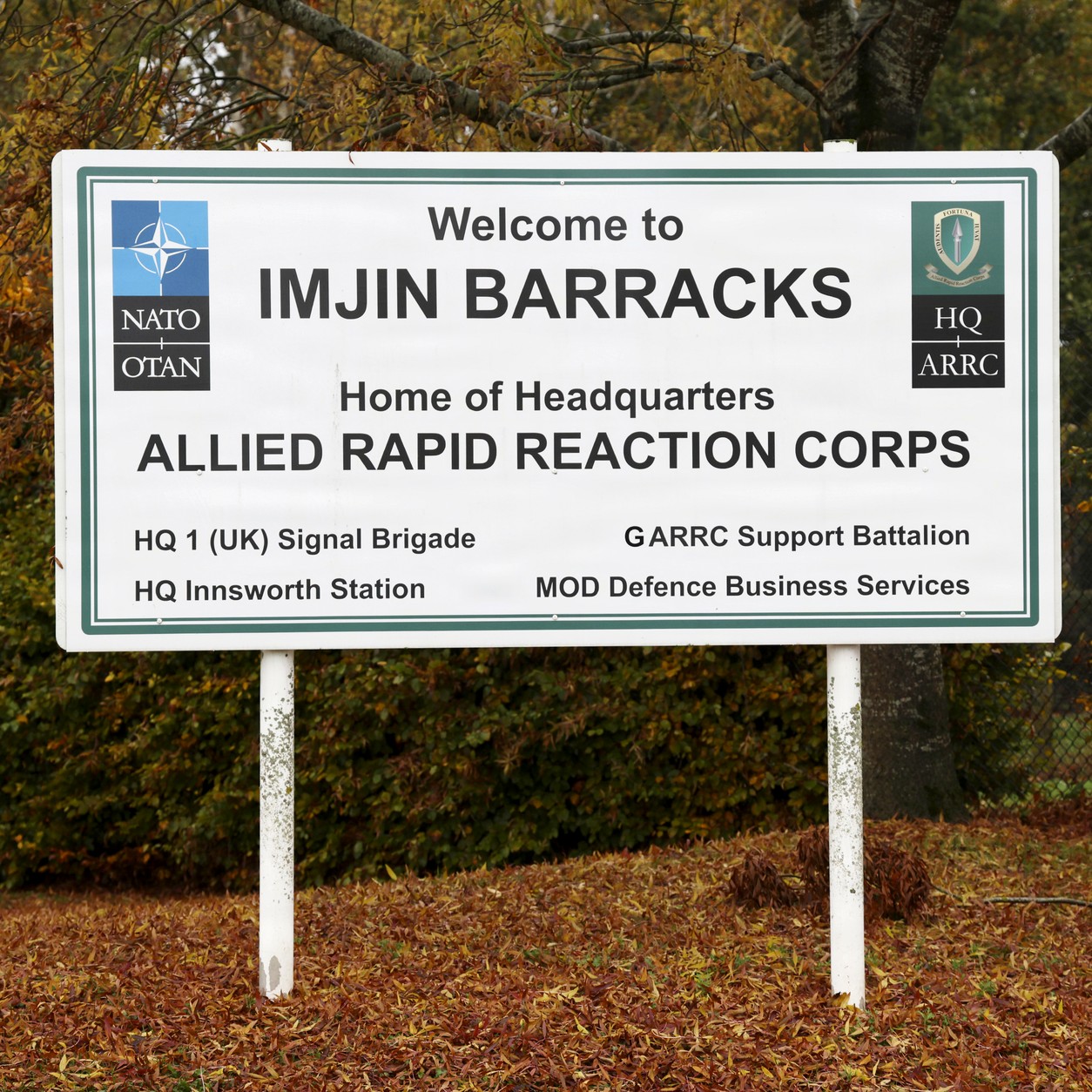
Imjin Barracks sits on the edge of Gloucester, a spread of low brick buildings where the Union flag and the Stars and Stripes fly side by side out front. Troops from 20 countries work there. If war ever came to Europe, the headquarters inside would help command NATO’s land forces.
On Tuesday, counterterrorism police arrested a man who worked there. He was American, 41 years old, a lieutenant colonel with a Bronze Star.
The police said almost nothing about him. Not his name, not his rank, not his job. Just one line: “The country to which the allegations relate is Russia.” Two days later his name came out — and with it a detail that turned the whole case around.
A Bronze Star and a Job Looking After Soldiers
U.S. officials have identified him as Lt. Col. Brandon Tyner. He has served in the Army since January 2008 as a senior human resources officer, according to The New York Times. He deployed to Afghanistan for a year starting in December 2013, served in Qatar, and was in Iraq in 2019 and 2020. He holds the Bronze Star Medal and the Defense Meritorious Service Medal.
His LinkedIn page says he studied criminology at the University of North Carolina at Pembroke. Most recently, The Hill reported, he worked as a G-1 operations officer — a personnel role — at the headquarters of NATO’s Allied Rapid Reaction Corps.
That headquarters is NATO’s largest base in Britain, about 100 miles west of London. It is the unit that “manages plans for ground troops in case of a crisis,” as ABC News put it.
“Insider Threats Are Real and Persistent”
London’s Metropolitan Police said the officer was arrested near Gloucester on Tuesday, Nov. 10, on suspicion of offences under Sections 1 and 3 of Britain’s National Security Act 2023. Section 1 covers obtaining or disclosing protected information. Section 3 covers assisting a foreign intelligence service. Officers searched two addresses in Gloucestershire, and he was taken into custody at a London police station.
“The allegations are serious and our investigation is very much ongoing,” said Deputy Assistant Commissioner Vicki Evans, who coordinates counterterrorism policing across the U.K.
The FBI worked the case alongside British police. “This important arrest involves allegations of espionage, which is of the utmost concern to the United States and our allies,” FBI Director Kash Patel said, adding that the bureau “has no tolerance for anyone who breaks their oath to the United States.”
The Army’s own spy-catchers were blunter. “The alleged conduct of a senior soldier, entrusted with sensitive information, is a sobering reminder that insider threats are real and persistent,” said Brig. Gen. Sean Stinchon, who leads U.S. Army Counterintelligence Command.
The Washington Post reported that the officer was suspected of trying to steal secret information from a NATO installation and deliver it to Russia.
The People Across the Table Weren’t Who He Thought
Then, on Thursday afternoon, The Wall Street Journal named him — and revealed how he was caught.
Tyner had been speaking with representatives of British authorities as part of a sting operation, the Journal reported, without knowing who they really were. U.S. officials separately told The New York Times and CBS News that he was caught in a sting.
What he said to them, and what he may have offered, has not been made public. “Beyond the sting, it was not clear what actions prompted Tyner’s arrest,” the Times reported. Nobody has said why he might have done it.
Cases like this are rare at his rank. Most U.S. troops convicted of espionage have been junior or mid-level service members, ABC News reported, and money is a common motive. Senior officers are a different prize: they typically have far greater access to sensitive military information that a foreign adversary would value.
Nothing Reached Moscow. That May Not Save Him.
The second turn came on Thursday, too. A U.S. official told The Associated Press that Tyner had not handed over anything to Russia. “No information made it into Russian hands,” the official said.
It may not matter much in court. Under Britain’s National Security Act, a Section 1 offence carries a maximum of life in prison. Section 3 carries up to 14 years. British prosecutors are expected to charge him on Sunday or Monday, officials told the AP.
After that, the U.S. Army intends to prosecute him under the Uniform Code of Military Justice, with the Pentagon working alongside the Justice Department, USA Today reported. ABC News noted that U.S. troops convicted in allied countries can serve their sentence abroad — and then face a second trial, and a second sentence, in a U.S. military prison.
The timing was hard to miss. The arrest came on the first day of new U.S.-Ukraine-Russia peace talks in Abu Dhabi, USA Today and CBS News reported. Moscow wanted no part of it. “This arrest does not concern us in any way. We don’t know what it’s connected to,” Kremlin spokesman Dmitry Peskov told reporters. “We have nothing to do with this and it has nothing to do with us.”
Britain’s spy chief sees it differently. Last month, MI5 Director General Sir Ken McCallum called Russia “aggressor number one” when it comes to threats against the U.K., according to CBS News.
Two Phones, Both Disconnected
Tyner has not spoken publicly. ABC News could not reach him and said it was unclear whether he has a lawyer. When the Times tried the cellphone numbers for him and his wife, both had been disconnected.
On Thursday, police obtained a warrant to keep holding him into next week.
For 18 years, his job in the Army was looking after other soldiers. Now he waits in a London police station to learn what he will be charged with — and which country will put him on trial first.
Marta Visser
Consumer editor
Marta has covered retail pricing and consumer rights for nine years and runs our basket-tracking tests.
One email a week. Every deal, checked.
No spam, no filler. Just the prices, recalls and stories that affect your week.