Kansas Hadn’t Sent a Democrat to the Senate Since 1932 — Then Voters Learned What Their Senator Had Done to His Own Patients
On election night, a megachurch pastor turned a hotel ballroom into a congregation. Across the state, the doctor-turned-senator he beat stood beside his wife and said: “I don’t have any answers.”
4 November 2026 · 6 min read
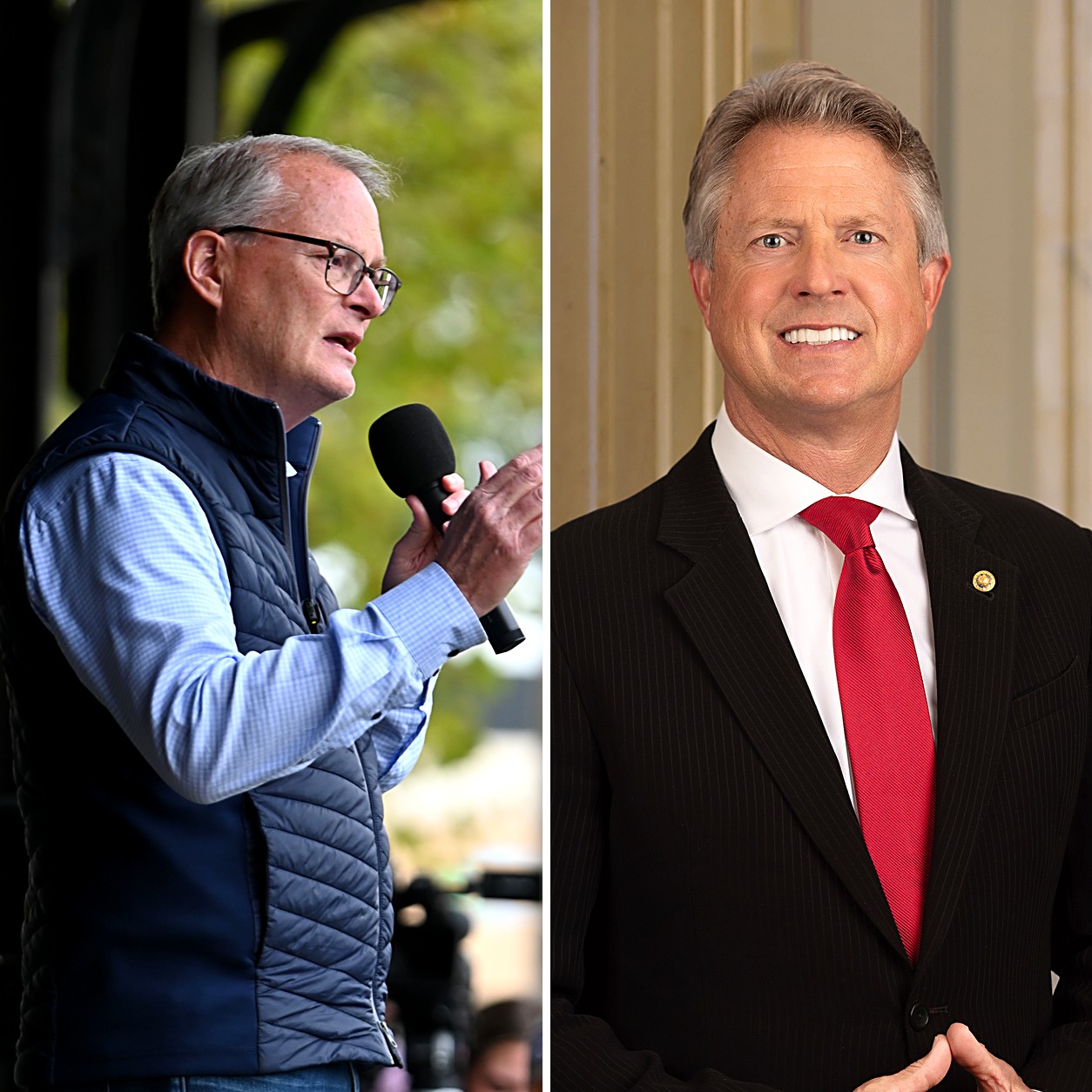
When the call came on Tuesday night, the ballroom of a hotel in Overland Park, Kansas, stopped sounding like a campaign party and started sounding like a revival.
The crowd roared. They chanted his name. Some of them wept, and some leapt into the arms of whoever happened to be standing next to them. A rock band that had been playing covers all evening picked its instruments back up, the drummer kicked in, and the singer launched into the only song that made sense: “I’m walking on sunshine… and don’t it feel good!”
The man they were cheering was not a career politician. He was a 62-year-old Methodist pastor named Adam Hamilton, and he had just done something no Democrat in Kansas had managed in 94 years.
He had won a seat in the United States Senate.
The State That Wasn’t Supposed to Be in Play
To understand how strange that night was, you have to understand Kansas. Donald Trump carried the state by more than 16 points in 2024. The last time Kansans sent a Democrat to the Senate, Herbert Hoover was still in the White House.
Yet when The Associated Press finished its count, Hamilton had roughly 51% of the vote to 46% for the sitting senator, Republican Roger Marshall, a margin of more than 50,000 ballots. Counties Marshall had carried in 2020 flipped. Even the ones he held, he held by far less, according to AP election data reported by The Guardian.
Part of the answer is the wave that swept the country on Tuesday, handing Democrats both the House and the Senate. Part of it is fuel and fertilizer. Kansas is about 88% farmland, and the war with Iran has nearly doubled diesel and fertilizer prices for the state’s farmers, Hamilton told The Guardian on election morning.
But Kansas had another reason to look hard at its senator this fall. It surfaced in September, in the pages of The New York Times, and it had nothing to do with Washington.
It had to do with what happened to his patients.
The Doctor’s Old Court Files
Before he went into politics, Roger Marshall spent 25 years as a doctor in Great Bend, Kansas, an obstetrician-gynecologist caring for women through pregnancy and childbirth.
A Times analysis of Kansas court records found that during that career, Marshall sued more than 700 of his patients over unpaid medical bills. About half the lawsuits were filed in his own name, the other half by Heartland Regional OBGYN, the practice he owned outright from 1998 to 2012, according to The Kansas City Star’s account of the report.
Some of the debts ran to several thousand dollars. Some were as small as $101. Paychecks and bank accounts were garnished, and patients were routinely charged 18% annual interest. When The Star later reviewed records from roughly 150 Kansas medical practices, it found no other provider charging a stated interest rate above 12%.
Then came the detail that would follow Marshall all the way to election night. In 81 of those cases, patients were arrested after missing court dates. In at least 13 more, his lawyers sought warrants, though the Times couldn’t confirm whether arrests followed.
The Times spoke with eight people Marshall had sued between 2003 and 2015. Most described living paycheck to paycheck, forced to choose between paying a doctor’s bill and buying groceries. Two said the bills he chased in court came from late miscarriages that needed surgery.
“Not Doctors”
Marshall’s camp did not back down. “Judges issue warrants when people repeatedly miss court dates, not doctors,” his spokesperson, Payton Fuller, told the Times, adding that his practice had “provided millions in uncompensated care” and used “the exact same billing and outside collection procedures as every other business or hospital in Kansas.”
His longtime debt-collection lawyer, Steven Johnson, put it more bluntly: “If defendants were allowed to appear only when they wanted to without any consequences, the court would get no business done.”
Experts were less convinced. Barak Richman, co-director of the health law program at George Washington University, told the Times that plenty of doctors never sue at all, and that wage garnishments and arrests of patients are “definitely on the extreme side.”
There was one more wrinkle. Marshall stopped practicing medicine when he was elected to Congress in 2016, but the Times found the collection work went on until 2021. And in 2025, as a senator, he introduced legislation that would bar hospitals from suing patients if they didn’t publicly post their prices, KCUR reported.
Hamilton’s campaign seized on all of it. In an October ad, three local doctors called the arrests “obscene” and “egregious.” On the debate stage, Marshall pushed back hard, saying the patients were a “small fraction” of those he treated. “This is such a gross mischaracterization of the compassion and love and care that the other doctors and nurses and I gave,” he said.
Kansas voters heard both sides. On Tuesday, they made their choice.
Two Men, Two Ballrooms, the Same Book
Here is the part of the night few people outside Kansas saw.
Shortly before 11 p.m., in a ballroom at the Hyatt Regency in Wichita, Marshall walked out with his wife, Laina, and began not with a political speech but with scripture. He quoted Proverbs 3:5, about trusting in the Lord and leaning not on your own understanding.
“I called Adam Hamilton. I’ve congratulated him. We’re conceding,” he said, according to The Kansas City Star. “I don’t have any answers. I’ll just tell you it’s been the greatest honor of my life to serve the state of Kansas for ten years.” He had lost despite Trump rallying for him in Kansas twice in the campaign’s final weeks. “It’s humbling, right? It’s very humbling,” he told the room. “I’ve always said, ‘Make disappointment an appointment with God.’”
That same night, Hamilton was quoting the Bible too. He turned his podium into a pulpit and preached the golden rule. “Do unto others as you’d have them do unto you,” he said. “What does it look like in Washington if they actually did that?” He told the crowd that Kansas was tired of “bullies and chaos,” and said that 30% to 40% of the people at his rallies were Republicans.
“In deeply red Kansas, the heart of America, I want us to model what it looks like when thoughtful people actually work together to solve problems,” he said, “instead of slinging mud at each other.” He even promised to become “Jerry Moran’s best friend” — Moran being the Republican who holds Kansas’s other Senate seat.
What Happens Now
Marshall remains a senator until Jan. 3, when Hamilton is sworn in alongside the rest of a Congress that Democrats will now control.
Hamilton has said his first priority for lowering costs is ending the war with Iran. Whether a pastor can “lead from the middle,” as his slogan promised, in a capital that rarely rewards it is a question Kansas will be watching closely.
But on Tuesday night, in Overland Park, nobody was asking it. Jeff Burgess, a 49-year-old small business owner from Lawrence, stood in the noise and tried to explain why he’d voted the way he did. “He cares about people and what their needs are,” he told The Guardian. “He cares about suffering.”
Behind him, the band was still playing. For one night at least, a state that hadn’t done this in 94 years was walking on sunshine.
Marta Visser
Consumer editor
Marta has covered retail pricing and consumer rights for nine years and runs our basket-tracking tests.
One email a week. Every deal, checked.
No spam, no filler. Just the prices, recalls and stories that affect your week.