Staff Couldn’t Reach 200 Flooded Chimps in Florida — So a Drone Dropped Their Bananas From the Sky
At Save the Chimps in Fort Pierce, stagnant water from Header Canal cut caregivers off from the islands. Named chimp Kaleb ate from the drop — then climbed a rope over floodwater chimps normally refuse to touch.
7 November 2026 · 4 min read
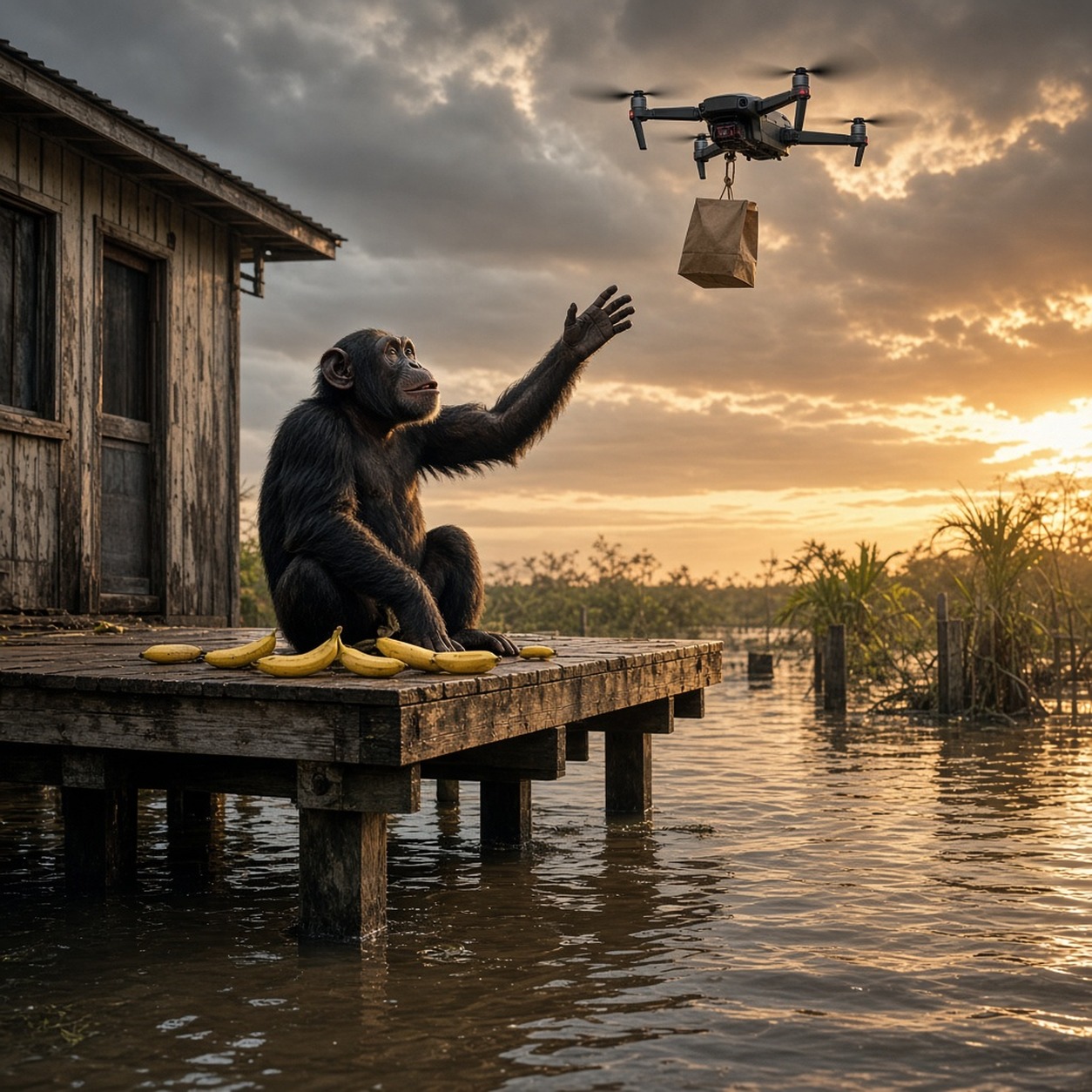
The paper bag hit the wet ground first.
Then a chimpanzee named Kaleb — one of roughly 200 rescued apes living across a flooded 150-acre sanctuary in Fort Pierce, Florida — claimed what the flying machine had left him. According to footage released by Save the Chimps and reported by the New York Post, the bag held fruit. Kaleb went straight for a banana.
Somewhere beyond the camera’s frame, stagnant floodwater still stretched across the property. Staff who normally walk those paths could not. The storm that had pounded South Florida with up to 20 inches of rain had turned ordinary caregiving into an engineering problem — and the temporary answer, for at least one hungry primate, was humming overhead on four rotors.
What the viral clips did not show at first glance was the harder truth underneath the cuteness: the chimps were safe on higher ground. The people trying to feed them were the ones stranded.
Breakfast That Came From Above
Five days after the heavy rain, water still covered much of Save the Chimps in St. Lucie County, CBS12 reported Friday. The sanctuary said employees could reach the grounds only by tractor, trailer, or large off-road vehicle. An overflowing local waterway — Header Canal — had kept the flood from draining away. The South Florida Water Management District had already issued an emergency order for flooding across several South Florida counties, including St. Lucie.
The chimps themselves were not underwater.
“The chimps, who live on islands with care houses at a higher elevation, are safe,” sanctuary CEO Ana Paula Tavares said. “But with flood waters stagnant throughout the property and surrounding area, it has been a major challenge for our staff to arrive at work, much less carry out their responsibilities.”
That single sentence explained the entire week. The islands held. The roads did not.
When Every Vehicle Quit
The sanctuary’s own fleet told the story as clearly as any weather map.
A donated “Swamp Buggy” — built specifically for marshy terrain — broke down midweek, according to the organization. (CBS12 dated the failure to Wednesday; the New York Post to Thursday.) Golf carts used to haul food and supplies sat dead after soaking in one to two feet of water, CBS12 reported. A staff member’s truck later sank into a sinkhole near the sanctuary — Thursday morning in CBS12’s account, Friday morning in the Post’s.
Other footage shared by the sanctuary showed primates ringed by water as caregivers tried to reach them by boat and truck. Hundreds of Floridians had already been pulled from the same historic storm — rain that officials said dumped up to 20 inches in just 12 hours in parts of the state, the Post noted.
At Save the Chimps, the storm’s second act was slower and stranger. Not a rooftop rescue. A logistics scramble across a landscape that refused to dry.
The Drop That Changed the Route
So the sanctuary flew in what it could not drive.
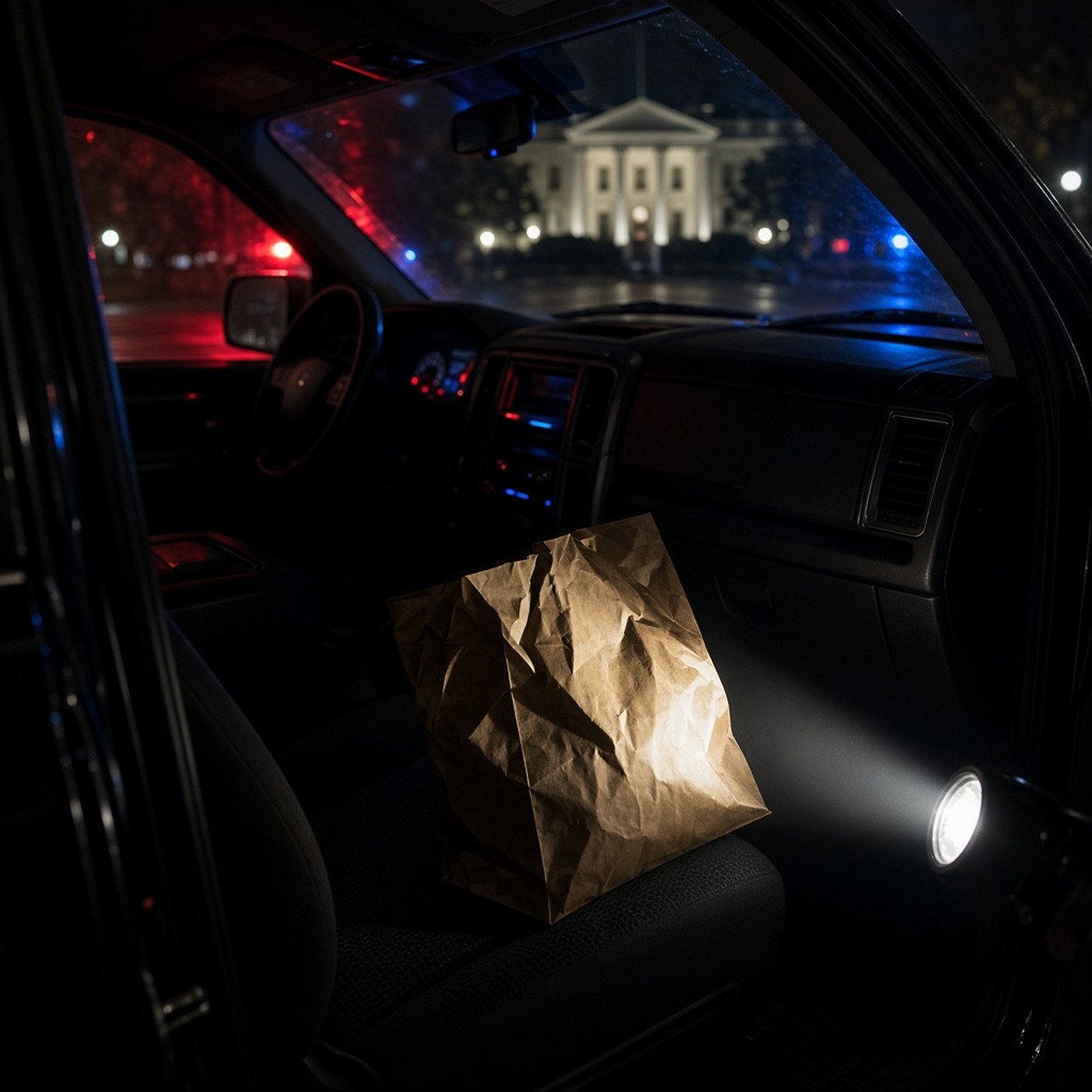
Footage captured a drone lowering a paper bag of fruit toward Kaleb, who was soon filmed happily eating a banana from the drop, the New York Post reported. Other clips showed blankets delivered the same way — one ape resting on a drone-dropped blanket while a companion picked bugs from its ear.
The organization told CBS12 that food was being delivered to one chimp by drone and did not say how long the aerial runs might continue. What the camera made unmistakable was the improvisation: when the paths flooded and the carts died, care came from the air.
Save the Chimps exists for animals pulled out of research laboratories, the entertainment industry, and the exotic pet trade, CBS12 noted. On an ordinary week, that mission looks like island care houses, daily feeding routes, and veterinary rounds. This week, it looked like a paper bag falling out of the sky onto ground the staff could not reach on foot.
A Rope Where Water Shouldn’t Be
Then came the image that undercut every assumption about what a chimp will do when the ground turns into a lake.
Additional sanctuary footage showed Kaleb climbing along a rope stretched over the floodwater — “a very unusual sight,” the New York Post relayed from the sanctuary, “as chimps avoid water at all costs.” The same animal who had just accepted breakfast from a drone was now moving through a landscape his species is wired to refuse.
It was not a stunt. It was a flooded home.
Facilities Director Mark Yohannan is scheduled to speak about the emergency at a North St. Lucie River Water District meeting at 10 a.m. Monday, Nov. 9, at 14666 Orange Ave. in Fort Pierce, CBS12 reported. The sanctuary’s message to local water managers will not be abstract. Header Canal’s overflow is still holding water on the property, and staff are still inventing routes around it — tractors where golf carts used to roll, drones where a buggy once ran, ropes where dry paths used to be.
What the Bag Really Meant
Back on the island that stayed dry enough, Kaleb finished what the drone had brought.
The bananas were an easy punch line — and the Post could not resist one. But the real story under the fruit was simpler and sharper: 200 chimpanzees who had already survived labs, stages, and private cages were now waiting out a Florida flood while the humans who feed them fought sinkholes, dead golf carts, and a canal that would not quit.
The paper bag hit the wet ground first.
Everything after that — the banana, the blanket, the rope over water a chimp should never have to cross — was caregivers refusing to leave their animals stranded, even when the sanctuary itself had turned into a swamp.
Marta Visser
Consumer editor
Marta has covered retail pricing and consumer rights for nine years and runs our basket-tracking tests.
One email a week. Every deal, checked.
No spam, no filler. Just the prices, recalls and stories that affect your week.