Toyota Called It the “Final Phase” of Its Takata Airbag Recall in 2019 — Now 314,000 More Toyotas and Lexuses Are Being Called Back
The danger is the same one that has killed 28 people in the U.S.: an inflator that can burst and spray metal into the cabin. Toyota’s U.S. notice leaves out one detail — but its filing overseas spells it out.
12 November 2026 · 5 min read
In October 2019, Toyota put out a press release with a reassuring phrase in its headline. After years of recalls tied to Takata airbags, the carmaker announced it was conducting the “final phase” — roughly 928,000 Corollas, Tundras, Sequoias, 4Runners and Lexus models in the United States, carried out ahead of the government’s schedule.
On Thursday, Toyota put out another one.
About 314,000 Toyota and Lexus vehicles in the U.S. are being recalled because, in the company’s own words, “the front passenger airbag made by Takata contains an inflator with propellant that can degrade over time.” Same supplier. Same seat. Same danger that has hung over American drivers for more than a decade. And the clearest explanation of why it is happening again isn’t in Toyota’s U.S. announcement at all — it’s in the paperwork the company filed on the other side of the world.
The Split Second Nobody Sees
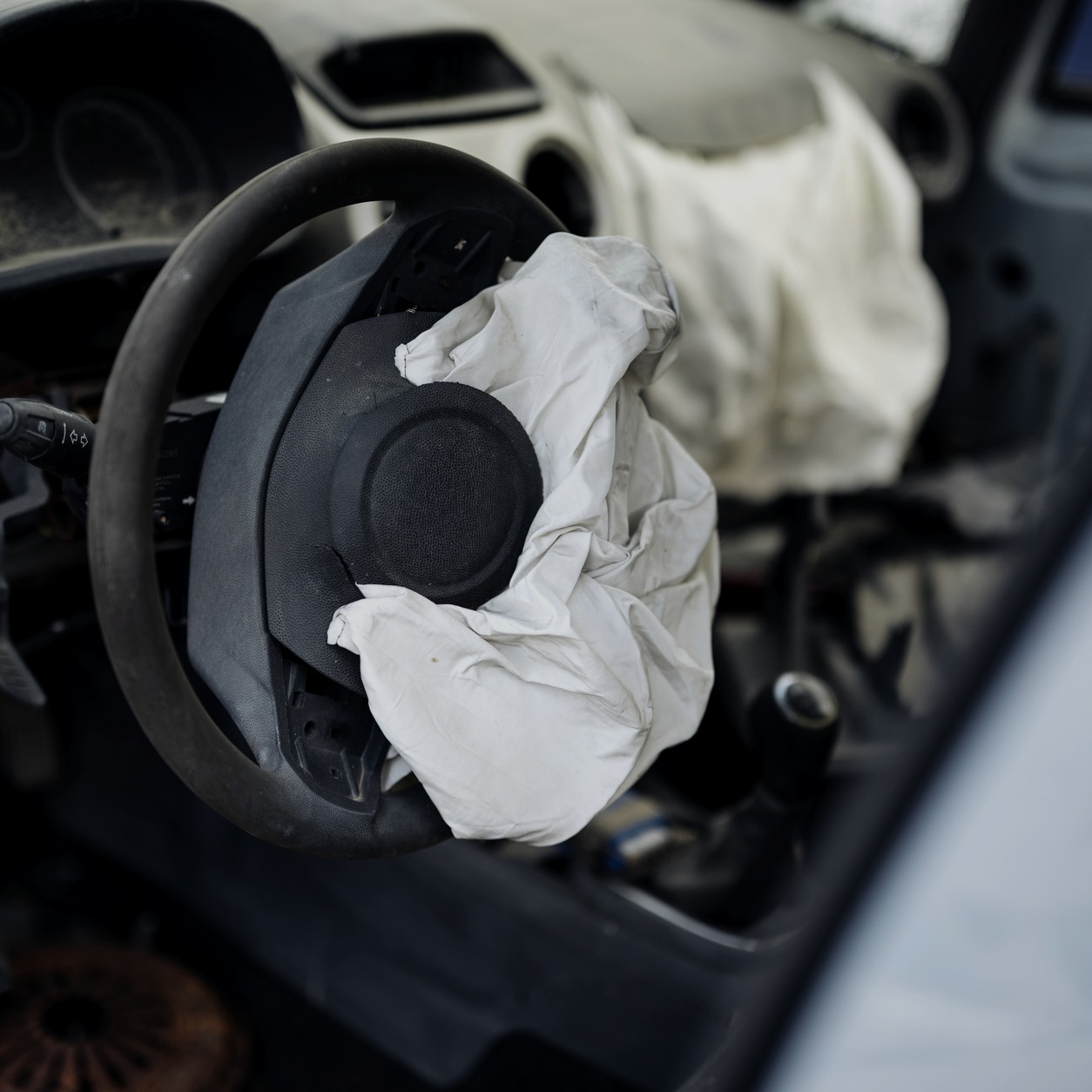
An airbag is supposed to be the gentlest violent thing in a car. In a crash, a small canister called the inflator fires, filling the bag in a fraction of a second and catching the person in the seat.
Toyota’s statement explains what happens when that canister has gone bad. “Degraded propellant can cause the inflator to rupture if the airbag deploys,” the company said. “An inflator rupture may cause metal fragments to pass through the airbag and into the vehicle interior at a high speed, which may result in injury or death to vehicle occupants.”
That is not a theoretical warning. The National Highway Traffic Safety Administration has confirmed that 28 people in the United States have been killed when defective Takata inflators exploded, and at least 400 more are alleged to have been injured. Repairer Driven News, reporting on the Takata recalls last month, compared the flying metal to “shrapnel from an exploding grenade.” The Takata recalls are, in NHTSA’s own description, “the largest and most complicated automotive recalls in United States history,” spanning 19 automakers and about 67 million inflators.
The Line Toyota’s U.S. Statement Leaves Out
Here is the strange part. Takata is a bankrupt company, and back in 2019 Toyota said that final phase would swap the last of its older Takata inflators for parts made by other suppliers. So where are these airbags coming from?
Toyota’s U.S. release doesn’t say. It doesn’t even list which models are involved, only that owners should check their VIN. But on the same day, Toyota filed a matching recall in Japan, and its notice there is blunt.
The cars in the Japanese recall — Corollas and other models built between 2000 and 2009, plus the Lexus IS250, IS250C, IS350, IS350C, IS F and SC430 — were already recalled once, between 2013 and 2017. Back then, their faulty airbags were swapped out. According to Toyota’s Japanese notice, the replacements were also made by Takata: a newer type of inflator containing a desiccant, a drying agent meant to keep moisture away from the propellant. Now, Toyota says, those replacement parts are being recalled again because they are approaching the product life predicted by the supplier.
In other words, the fix needs fixing.
Lexus Australia said the same thing in its own recall of 7,015 IS sedans and convertibles this week, which CarExpert reported was launched “to fix an earlier attempt to rectify defective Takata airbag inflators.” The Australian notice describes Takata front passenger inflators installed “as a replacement part under a prior recall,” warning that “continued prolonged exposure to high absolute humidity, high temperatures, and high temperature cycling may cause the inflator to rupture.”
The Warning That Was Written Years Ago
What makes this recall land differently is that regulators saw it coming.
When Takata’s desiccated inflators were studied, NHTSA concluded that they were “generally not as susceptible” to breaking down as the original ones — good news for the roughly 56.1 million of them built for the U.S. market, including about 20.9 million on the passenger side. But the agency added a sentence that reads very differently today. While none of them posed “an imminent risk to safety in the short term,” NHTSA wrote, “data shows that some inflators may present a risk in such environments several years from now.”
That page was last updated in February 2021. Several years from now has arrived.
There is a calmer side to this, too. Lexus Australia stressed that its recall is “initiated as a proactive measure,” adding that “based on the investigation of recovered parts, no degradation of the propellant has been currently identified.” The company told owners there they can keep driving while they wait for the repair. Toyota’s U.S. statement makes no mention of any injuries linked to these particular inflators.
What Toyota and Lexus Owners Should Do Now
The recall at a glance
- Vehicles: About 314,000 Toyota and Lexus vehicles in the U.S. Toyota has not yet published the U.S. model list. In Japan, the matching recall covers Corollas and other models built 2000–2009, plus the Lexus IS250, IS250C, IS350, IS350C, IS F and SC430. In Australia, it covers Lexus IS models built from August 2005 to December 2012.
- Problem: The Takata front passenger airbag inflator’s propellant can degrade over time in heat and humidity, and the inflator can rupture when the airbag deploys, sending metal fragments into the cabin.
- The fix: Toyota and Lexus dealers will replace the front passenger airbag inflator or the whole airbag assembly, depending on the model, free of charge.
- Check your car: Enter your VIN or license plate at Toyota.com/recall or nhtsa.gov/recalls. Questions: Toyota Brand Engagement Center, 1-800-331-4331.
- Already had your airbag replaced years ago? Check anyway. Overseas, this recall is aimed at exactly those cars.
- Nothing showing yet? The recall was announced Thursday, so check again in a few days. NHTSA recommends running your VIN at least twice a year.
- Don’t disable the airbag. NHTSA warns that “an air bag that is purposely disabled has a 100-percent chance of failing to provide any protection in a crash.”
The numbers say most drivers have already done their part. NHTSA told Repairer Driven News last month that 91% of recalled Takata airbags have been replaced or accounted for — but Carfax still counts about 4.7 million U.S. vehicles carrying one.
If the overseas filings are any guide, Thursday’s recall adds a new kind of car to that worry: one whose owner did everything right, took it to the dealer when the letter came, and drove home believing the story was over. Seven years ago, Toyota called it the final phase. The airbags, it turns out, kept their own schedule.
Marta Visser
Consumer editor
Marta has covered retail pricing and consumer rights for nine years and runs our basket-tracking tests.
One email a week. Every deal, checked.
No spam, no filler. Just the prices, recalls and stories that affect your week.