The Fed Just Raised Interest Rates for the First Time in More Than 3 Years — Here’s Who Could Pay More
For the first time since 2023, the Federal Reserve has raised interest rates.
17 September 2026 · 4 min read
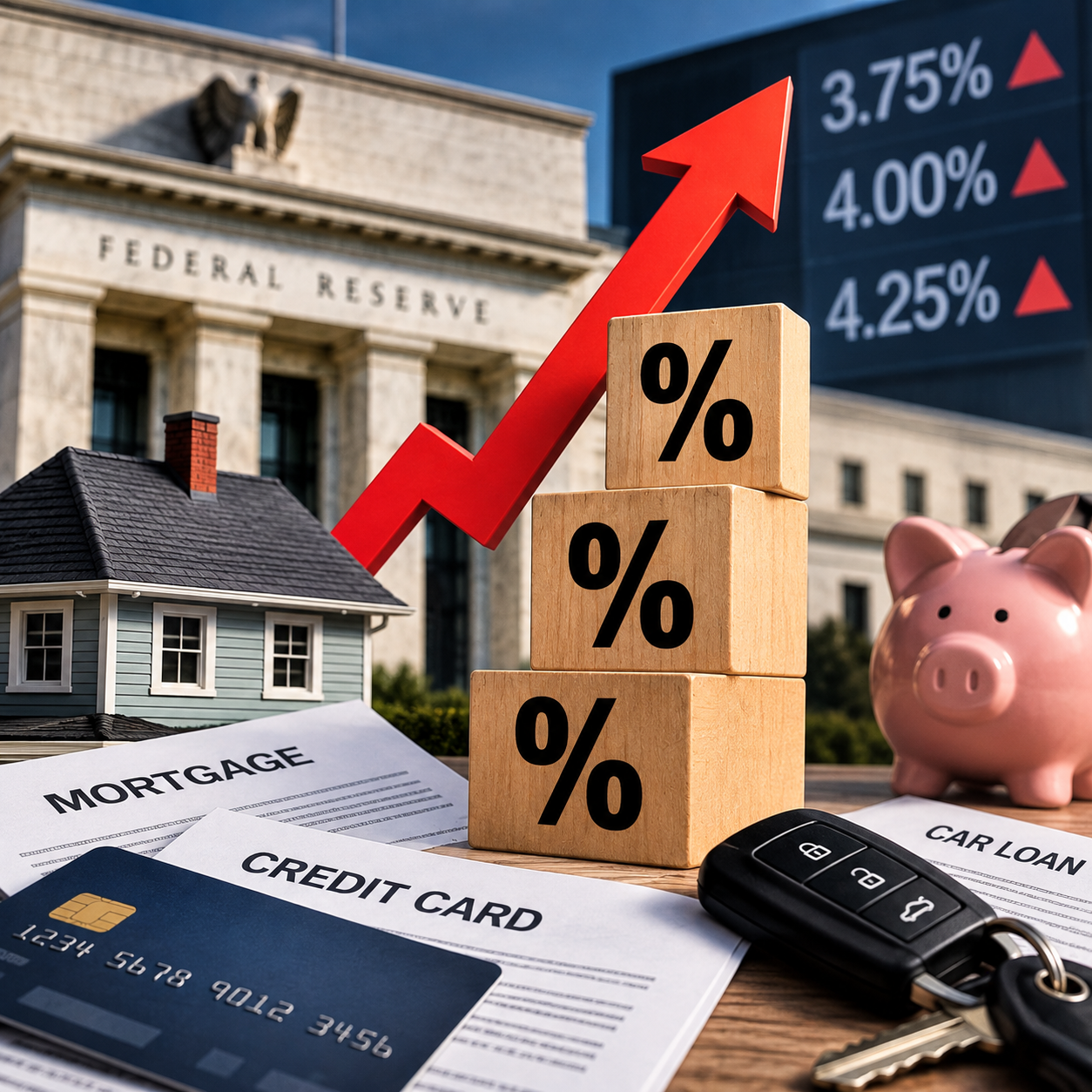
The move was only a quarter of a percentage point, but for millions of Americans, even a small increase can eventually show up in places that matter much more than Washington policy meetings.
Credit cards.
Adjustable-rate loans.
Car financing.
Home equity lines.
And possibly the cost of borrowing money in the months ahead.
The Federal Reserve raised its benchmark federal funds rate on September 16 from a range of 3.50%–3.75% to 3.75%–4.00%, marking its first increase in more than three years. The decision was unanimous.
And policymakers are signaling that this may not be the last increase.
Why the Fed raised rates now
The Federal Reserve has spent years trying to bring inflation back toward its 2% target.
But officials say inflation remains too high.
Fed Chair Kevin Warsh said this week that underlying inflation trends had not improved enough, even after some encouraging readings earlier in the summer.
That left policymakers with a familiar tool:
Make borrowing more expensive.
Higher interest rates can reduce spending and slow parts of the economy, which can eventually help bring price increases under control.
The downside is that consumers often feel the effect first.
Credit card balances could become even more expensive
If you carry a credit card balance from month to month, this is one of the areas worth watching most closely.
Many credit card interest rates are variable and move in response to changes in the prime rate.
Major U.S. banks raised their prime lending rates shortly after the Fed's decision.
That means people already paying high interest rates on revolving debt could see borrowing become even more expensive.
For someone who pays their statement in full each month, the change may barely matter.
But for households carrying thousands of dollars in balances, even a modest increase can add to the amount of interest paid over time.
Homeowners with adjustable rates should pay attention
The impact on mortgages is a little more complicated.
A Fed rate hike does not automatically mean every mortgage rate jumps by the same amount.
Traditional 30-year fixed mortgage rates are more closely connected to longer-term Treasury yields and broader financial-market expectations than directly to the Fed's overnight rate.
So homeowners who already locked in a fixed mortgage rate generally won't see their existing monthly payment change because of Wednesday's decision.
But borrowers with adjustable-rate mortgages, or ARMs, may eventually feel the impact depending on when their rate resets.
Home equity lines of credit can also be sensitive to changes in short-term rates.
For those borrowers, it may be worth checking the exact terms of the loan rather than assuming the payment will stay the same.
Car loans and other borrowing could feel the squeeze too
Consumers shopping for a new vehicle, taking out a personal loan, or financing a large purchase may also encounter higher borrowing costs.
The Federal Reserve doesn't directly set the rates offered on auto loans or personal loans.
But changes in its benchmark rate influence the broader cost of lending throughout the financial system.
Banks and other lenders may respond by charging more for new loans, particularly if policymakers continue increasing rates later this year.
And that possibility is now very real.
New Fed projections suggest most policymakers expect at least one additional increase before the end of 2026.
There is some good news for savers
Borrowers may not like higher rates.
Savers often do.
When interest rates rise, banks can offer better returns on products such as:
- High-yield savings accounts
- Certificates of deposit
- Money-market accounts
- Treasury bills
But those increases don't always happen automatically.
Reuters notes that banks can be much quicker to increase what they charge borrowers than what they pay depositors.
That means consumers may need to shop around rather than assuming their current savings account will suddenly start paying significantly more.
For people keeping substantial cash in a traditional account with a very low rate, the difference between banks can become increasingly meaningful when interest rates rise.
Why this matters even if you aren't borrowing right now
Interest rates ripple through far more than mortgages and credit cards.
Businesses also borrow money.
When financing becomes more expensive, companies may slow investment, hiring, expansion, or purchasing.
Higher rates can also put pressure on stock and bond markets.
Following the Fed's announcement, U.S. stocks fell and Treasury yields climbed as investors reacted to the prospect of additional tightening.
That matters for Americans with retirement accounts, investment portfolios, or pensions tied to financial markets.
Americans are already dealing with higher everyday costs
The timing is especially important because many households are still dealing with elevated prices.
U.S. consumer prices are now roughly 30% higher than they were in 2019, according to Reuters.
Meanwhile, new retail data show Americans are continuing to spend heavily even as lower-income households face pressure from rising essential costs and weaker purchasing power.
That creates a difficult combination for some families:
Higher prices on everyday goods and potentially higher interest costs on money they borrow.
Could rates rise again?
Possibly.
The Fed isn't promising a specific path, but policymakers have indicated that additional increases may be needed if inflation remains stubbornly high.
A majority of Fed officials currently expect at least one more increase this year.
That means Wednesday's decision may be less important as a one-time quarter-point move and more important as a signal.
After more than three years without a rate increase, the Fed has officially changed direction.
For Americans carrying variable-rate debt, that could mean paying more.
For savers, it could finally mean earning more.
And for everyone else, the next few months may determine whether this was a single adjustment — or the beginning of a much longer stretch of higher borrowing costs.
Marta Visser
Consumer editor
Marta has covered retail pricing and consumer rights for nine years and runs our basket-tracking tests.
One email a week. Every deal, checked.
No spam, no filler. Just the prices, recalls and stories that affect your week.