
Americans Are Changing the Way They Grocery Shop — And It’s Not Just About Buying Less
For years, the simplest explanation for changing grocery habits was inflation: prices went up, so shoppers bought less.
15 September 2026 · 4 min read
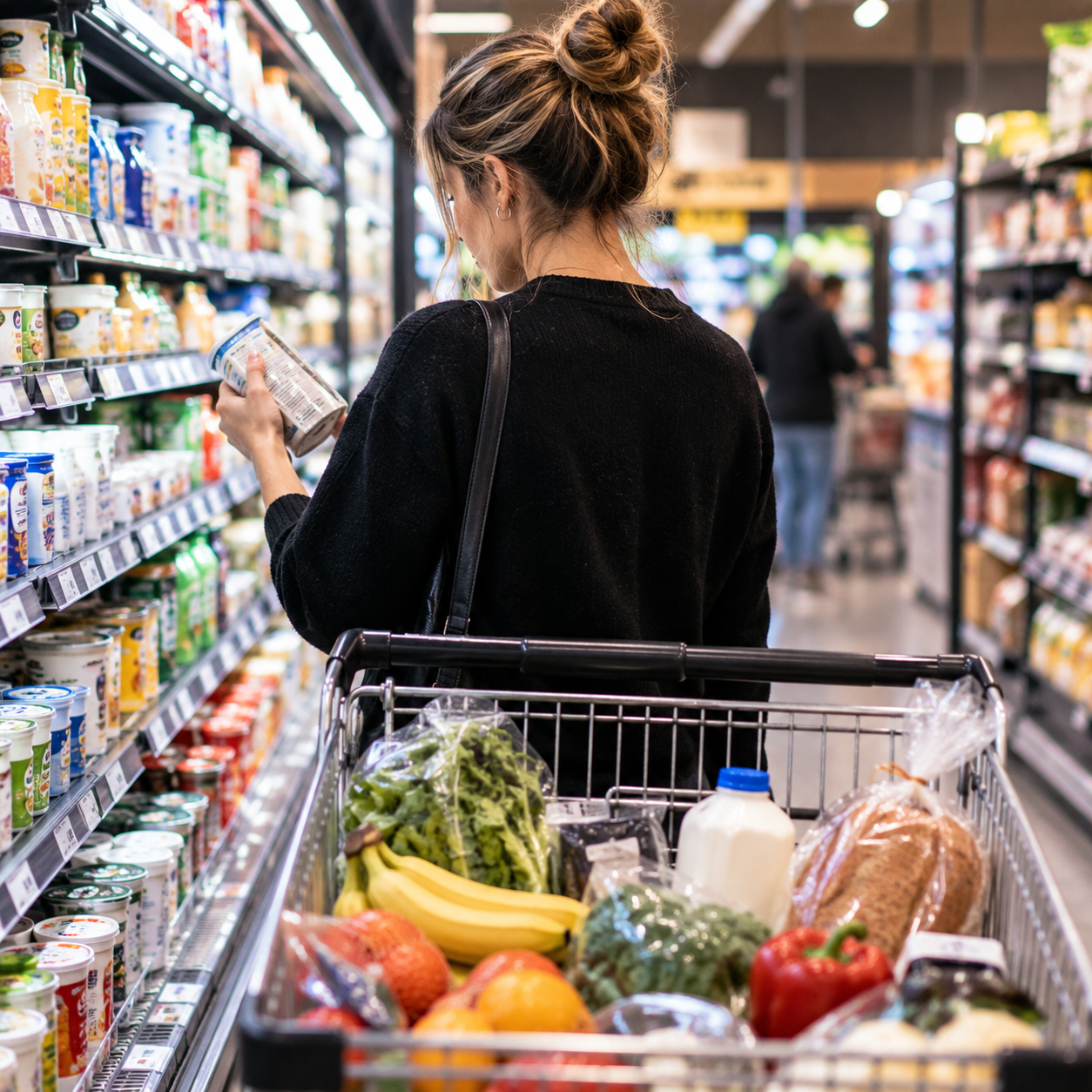
But that no longer tells the whole story.
New consumer data suggests Americans are becoming far more deliberate about how they shop, switching brands more freely, mixing premium and budget products in the same basket, and deciding category by category where something is worth paying more for — and where it isn’t.
In other words, the grocery cart is becoming less about loyalty and more about value.
Brand loyalty is getting weaker
One of the clearest shifts is how shoppers think about store brands.
NielsenIQ reported in August that 58% of consumers say they don’t care whether a product is a national brand or a private-label product — they simply buy what they need.
The same research found that 68% see private-label products as a good alternative to national brands, while 69% believe they offer good value for money.
That is a big change from the old idea that store brands were simply the “cheap version.”
For many shoppers, they are increasingly becoming a normal first choice.
Shoppers are trading down — but not everywhere
This is where the story gets more interesting.
Americans aren’t necessarily choosing the cheapest version of everything.
Recent NIQ analysis describes what it calls a “barbell” market: consumers are increasingly gravitating toward either value products or products they believe are genuinely worth paying extra for, while the middle of the market is getting squeezed.
A shopper might buy a premium coffee they love, for example, then choose store-brand paper towels, cereal or cleaning products.
They may splurge on skincare but buy the lowest-priced pantry staples.
That means the modern grocery trip is becoming much more selective.
The question is no longer simply:
“What is cheapest?”
It is increasingly:
- “Where is paying more actually worth it?”
- Promotions matter more than ever
Shoppers are also becoming more willing to wait for a deal or switch brands when the price is right.
NIQ says 32% of consumers are switching to lower-priced brands, 31% are stocking up when a preferred brand goes on promotion, and 28% are choosing whichever brand happens to be on sale.
That makes promotions increasingly powerful.
Someone who bought the same detergent, coffee or cereal for years may now be much more willing to move to a competitor if the price gap becomes large enough.
For brands, that is a difficult shift.
For consumers, it means the shelves are becoming more competitive.
Store brands aren’t just about saving money anymore
Retailers have noticed the change.
Private-label products are increasingly appearing at both ends of the market.
There are still basic, low-cost store brands, but retailers are also introducing more premium private-label foods, household products and specialty items.
NIQ says private label is now competing not only at the value end of the market but also in premium categories.
That creates an interesting situation for traditional brands.
A shopper may look at three options:
Budget store brand → mainstream national brand → premium store brand
And increasingly, the middle option has the hardest job explaining why it deserves the extra money.
Americans are still going to physical grocery stores
Despite the rise of delivery apps and online grocery orders, the supermarket itself remains very important.
FMI’s 2026 U.S. Grocery Shopper Trends research found that 54% of grocery shoppers always shop in-store at their primary store, while another 20% mostly shop in-store.
But expectations have changed.
Shoppers increasingly expect physical stores to provide some of the convenience they have become used to online — easy price comparisons, digital coupons, loyalty offers, product information and fast checkout options.
So even when people are still walking the aisles, the way they make decisions inside those aisles is becoming more digital and more calculated.
Grocery spending is still taking a bigger bite
Another reason shoppers are paying closer attention is simple: groceries remain a major pressure point for household budgets.
NIQ says 39% of U.S. consumers report spending more on groceries than they were a year earlier.
That doesn’t necessarily mean families are buying more food.
It means they are being forced to think harder about where their money goes.
As a result, people are more likely to compare unit prices, wait for promotions, substitute brands and decide which products genuinely matter to them.
The grocery cart is becoming personal
Perhaps the biggest shift is that there is no longer one simple “budget shopper” or “premium shopper.”
The same person can be both.
A family might refuse to compromise on a favorite coffee brand but happily switch to a cheaper pasta sauce.
Someone might spend extra on organic produce but choose store-brand milk and cleaning products.
And a shopper who spends more on convenience in one category may aggressively look for savings in another.
That is why the change in grocery shopping is bigger than Americans simply buying less.
They are becoming more selective about what deserves their money.
The bottom line
American shoppers are still spending, but they are increasingly doing it with a strategy.
Brand names matter less than they once did. Store brands are gaining credibility. Promotions can pull shoppers away from products they have bought for years. And consumers are becoming comfortable mixing cheaper essentials with occasional premium purchases.
The grocery aisle is still full of familiar products.
What has changed is the way shoppers decide which ones belong in the cart.
Marta Visser
Consumer editor
Marta has covered retail pricing and consumer rights for nine years and runs our basket-tracking tests.
One email a week. Every deal, checked.
No spam, no filler. Just the prices, recalls and stories that affect your week.