Drones Hit Four Ships Off a NATO Country’s Coast in Two Nights — Then Romania Told Captains to Avoid Its Own Waters
Fighter jets were already in the air. Fires broke out on three vessels, one loaded with nearly 6,000 tons of diesel. And as of Sunday, nobody would say who sent the drones.
15 November 2026 · 6 min read
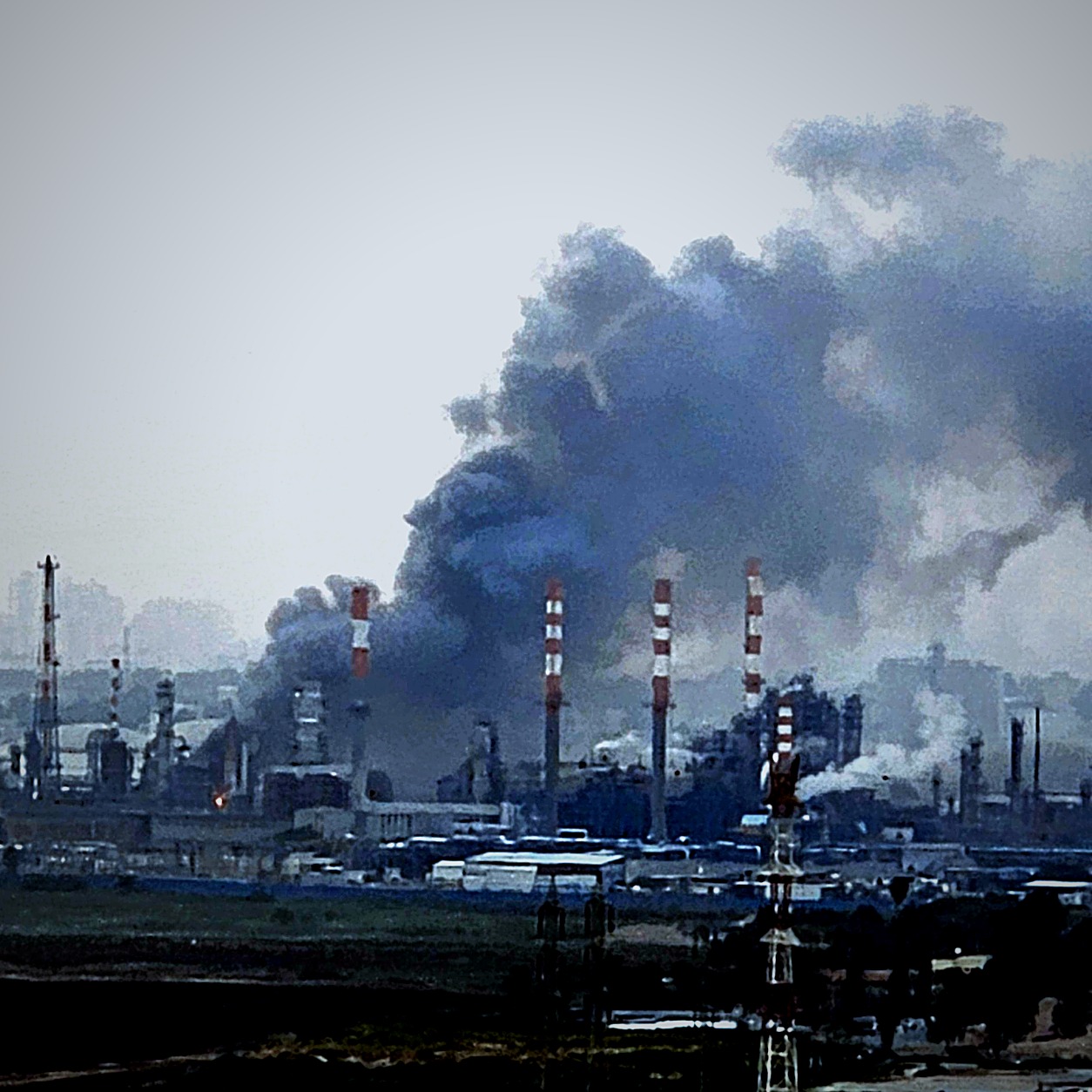
The first warning reached phones in the Danube Delta at 8:51 on Saturday night. Radar had picked up something in the dark over the Black Sea, and residents of eastern Tulcea County — the reed-fringed corner of Romania where the great river finally spills into the sea — were told to take shelter.
Twenty minutes later, a few miles off the fishing port of Sulina, a drone slammed into the Greek-flagged tanker Evia Petrol V. Fire broke out on board. Thirty-five minutes after that, another drone found the bulk carrier Marsol, anchored about five nautical miles southeast of the Sulina Canal. It caught fire too. Before the night was over, a third ship would be burning — and it was carrying close to 6,000 tons of diesel.
This was not happening off the coast of Ukraine. According to Romania’s defense ministry, at least two of those ships were hit inside Romanian territorial waters — the sea of a NATO member, the alliance the United States is sworn to defend. Romanian F-16s were in the air. And yet, as the country’s defense minister admitted the next morning, the drones got through anyway.
Two Nights, Four Ships
The attacks didn’t start on Saturday. Late on Friday, Nov. 13, at about 9:40 p.m., a drone hit the Palau-flagged cargo ship Larissa 1 roughly seven nautical miles northeast of the village of Sfântu Gheorghe, according to Romanian broadcaster Digi24 and HotNews. The ship was heading for the Sulina anchorage, with Ukraine as its final destination. The strike destroyed a cargo crane. The captain reported no injuries and no fire.
Then came Saturday. After Evia Petrol V and Marsol were hit, a second RO-Alert went out at 11:19 p.m. Somewhere in that same night, the oil products tanker Ali Najafov radioed that it, too, had been struck near the mouth of the Danube.
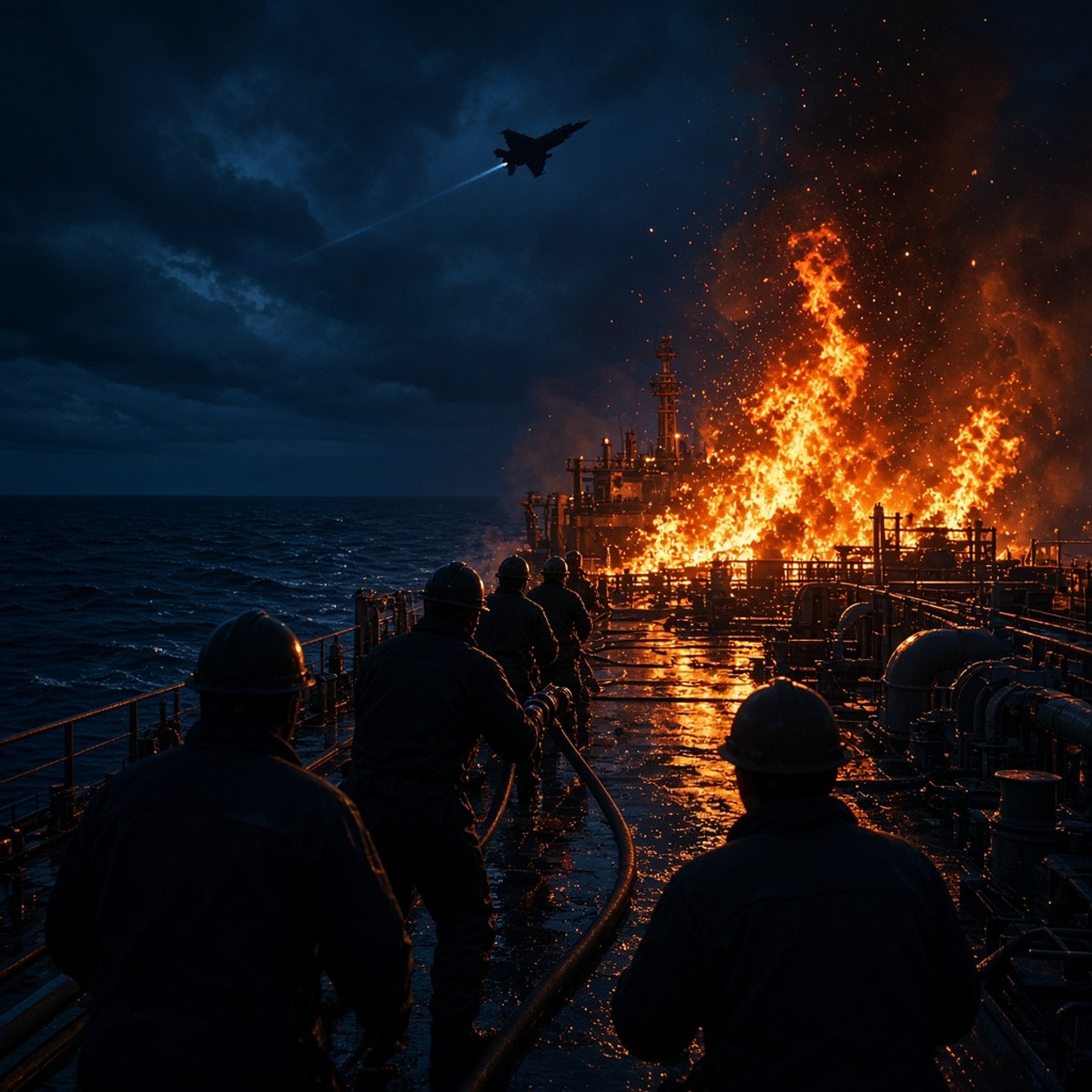
On every ship, the fight was left to the crews. “In both cases, the fires were extinguished by the ships’ crews. No casualties were reported,” Romania’s defense ministry said of the first two vessels, according to POLITICO. Romanian outlet Gândul published footage from the deck of the Ali Najafov showing crew members battling the flames while another man reports the strike over the ship’s radio.
The stakes on that third ship were the highest of all. The Ali Najafov, owned by the Palmali shipping company, had 14 people aboard — 13 Azerbaijani citizens and one Turkish national, according to the group Support for Azerbaijani Seafarers, quoted by Azerbaijan’s Trend news agency. Eyewitnesses said the crew’s fast response stopped the fire from reaching the cargo tanks and the diesel on board.
“And Yet the Drones Hit the Ships”
On Sunday morning, Defense Minister Ștefan-Radu Oprea laid out what had happened in unusually blunt terms. “Three ships were hit last night near the mouths of the Danube,” he wrote, in comments carried by Radio Romania. “The F-16 aircraft took off, carrying out their assigned missions. And yet the drones hit the vessels under various flags.”
Prime Minister Luca Niculescu said the armed forces had scrambled fighter jets twice. “These incidents are unacceptable and constitute a violation of international law,” he said, according to Reuters. “They reflect the deteriorating security situation caused by Russia’s ongoing war against Ukraine.”
Notice what neither man said. As of Sunday, Romanian officials had not identified who launched the drones. Reuters reported that officials called the strikes a direct consequence of Russia’s war — but stopped short of naming a culprit. Russia has denied targeting Ukraine’s neighbors with drones.
The location matters. The Sulina Canal links the Danube to the Black Sea, and Ukraine uses it to get its exports out. The area where the vessels were hit is where ships routinely drop anchor and wait their turn to enter. “It is the anchorage area for Sulina, between Sfântu Gheorghe and Sulina,” Commodore Lucian Grigorescu, head of Romania’s Maritime Hydrographic Directorate, told Observator. “Ships usually anchor there before entering the Sulina branch.”
The Warning Romania Gave Its Own Waters
Then came the move that says more than any statement. On Sunday, Romania’s Maritime Hydrographic Directorate issued radio notice to mariners No. 172/2026, advising commercial captains to plan their routes so they avoid a zone off the Danube Delta — the very patch of sea where the ships were hit, Antena 3 CNN reported.
In other words, a NATO country was telling ships to steer around a stretch of its own coastline.
Oprea stressed that the sea is not closed. “Navigation in the area remains permitted,” he said, according to Antena 3. “Our assessments show that the presence of aerial and surface objects coming from the north makes the risk to navigation high in a perimeter off the Danube Delta.” The notice doesn’t say exactly what those objects are. It stays in force until further notice.
Romania is now asking its allies for help. “On Tuesday and Wednesday I will be in Brussels for the meeting with my fellow ministers,” Oprea said, as quoted by Reuters. “We need the solidarity of our allies, shown through patrols with surveillance aircraft and through equipment for counter-drone warfare.” France has already moved an Atlantique 2 maritime patrol plane to Romania after Bucharest asked for reinforcements, and Oprea said he had pressed French defense company Thales to deliver gap-filler radars ahead of schedule.
This Ship Had Been Here Before
The Ali Najafov’s night carried a grim echo. On Oct. 15, 2023, the same tanker hit a sea mine near the Bystroe Canal in the Danube Delta while sailing for a Ukrainian port, Romanian outlet Ziare reported, citing reports at the time. The ship was damaged; no one was hurt. Three years later, its crew was fighting another fire in almost the same waters.
And this weekend may have been the lucky version. In October, at least seven commercial vessels were struck by drones in the Black Sea close to Romania and Bulgaria, leaving more than 20 sailors dead and dozens missing, POLITICO reported. One of them, the chemical tanker Wine Trader, sent a distress signal 14 nautical miles from Sulina in mid-October; seven of its 12 crew went missing. Another attack near the port of Constanța on Oct. 23 left one sailor dead and three missing, according to the Kyiv Independent.
At the time, Romania’s foreign minister, Oana Țoiu, did not hedge. “The killing of merchant marine sailors in this region and around the world is a crime,” she wrote. “Russia bears full responsibility for these events.”
Last week, European Commission President Ursula von der Leyen said the EU would help pay for some of the cost of securing the Black Sea, according to POLITICO.
The Question Nobody Has Answered
For now, the hard part is the part no one will say out loud: whose drones these were, and what NATO does if the next one doesn’t miss the crew.
This weekend, it came down to a few dozen sailors with fire hoses on dark decks off the Danube Delta — and they won. The fires went out. Everyone survived. But the drones’ owner still has no name, and the warning to captains stays in force until further notice.
What are your thoughts? Share your view in the comments.
Marta Visser
Consumer editor
Marta has covered retail pricing and consumer rights for nine years and runs our basket-tracking tests.
One email a week. Every deal, checked.
No spam, no filler. Just the prices, recalls and stories that affect your week.