The NSA’s Secret Network, Apple and Marriott All Crashed on the Same Day — and Almost Every Official Explanation Has One Thing in Common
Something big has broken in America every weekday since last Thursday. One senator calls it “the greatest coincidence in the history of the world” — but the agencies’ and companies’ own explanations point somewhere much closer to home.
17 November 2026 · 5 min read
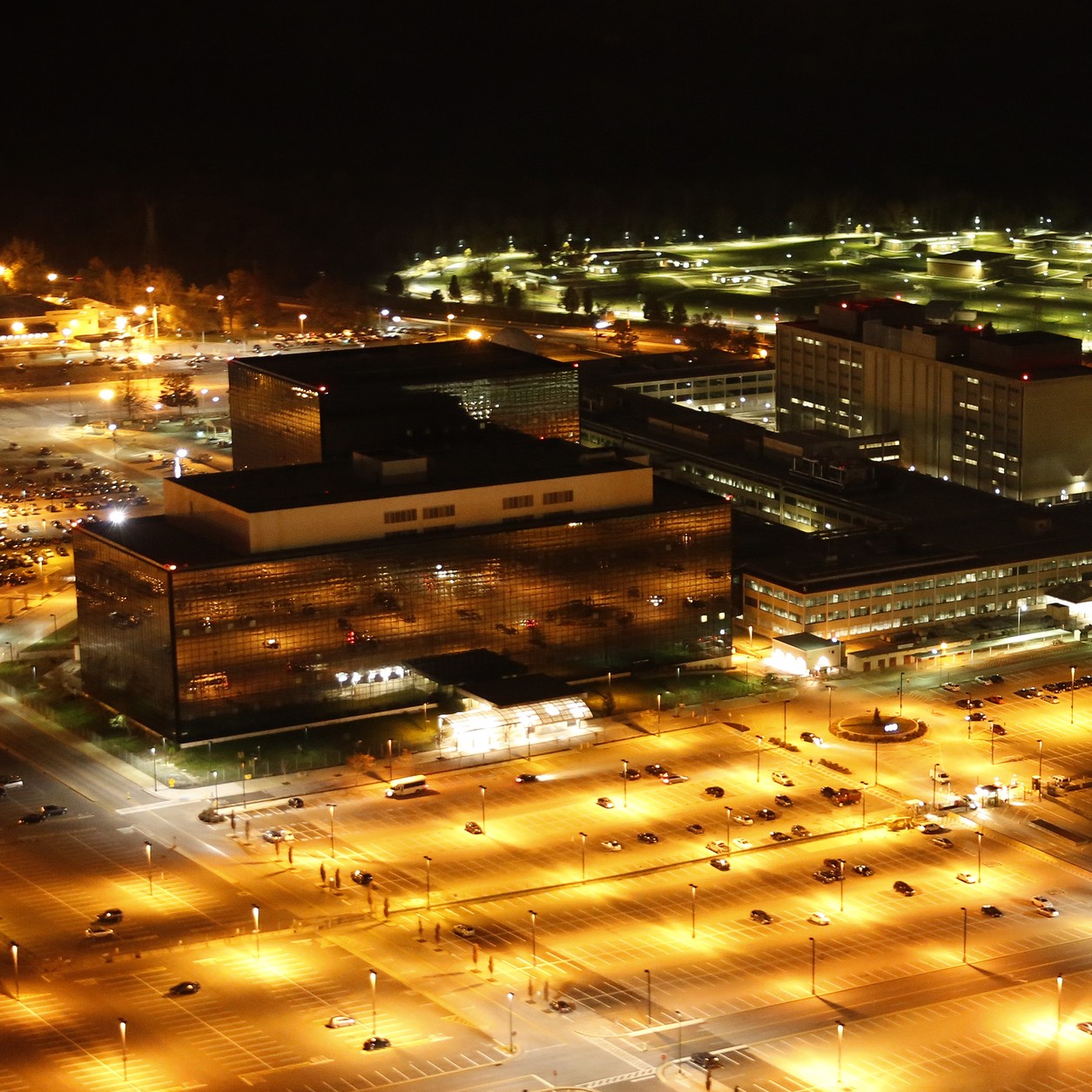
At Fort Meade, Maryland, some of the most closely guarded employees in America were told on Tuesday not to come in at the usual time.
The reason was not a storm or a threat at the gate. NSA Net, the classified network the National Security Agency uses to store and share its secrets internally, had gone down. So the agency staggered arrival times for non-emergency staff, sources told CBS News, to stop large numbers of people logging on at once while the system struggled. Sources referred to the modified schedule as “Code Gray.” Some work was shifted to other NSA facilities around the country.
Inside Apple stores in New York and Chicago, employees told NBC News their internal software had stopped working. They couldn’t complete purchases or book appointments. Elsewhere, Marriott guests took to Reddit to complain about reservations and check-ins, and Charles Schwab customers had opened their browsers that morning to an “Internal Server Error.”
It was the latest in a run of failures that has now hit every weekday since last Thursday. Banks, airlines, email, an entire national airspace — and now one of the country’s most secretive intelligence agencies. Every time, officials have said the same thing: it’s not connected, and it’s not a cyberattack. Not everyone in Washington believes that anymore. But buried in the official explanations is a detail that answers a different, and maybe more unsettling, question.
A Week of Things Breaking
The run began last Thursday, when a Microsoft outage knocked out services including Outlook and Teams. The next day, Friday, Nov. 13, the Federal Aviation Administration halted every departing flight in the country. The ground stop lasted four and a half hours — the longest pause in U.S. air travel since the September 11 attacks, Reuters reported — and more than 6,000 flights were canceled through Saturday.
On Monday it was money. Customers of JPMorgan Chase, Bank of America, Wells Fargo and U.S. Bank reported trouble logging in and moving funds. Hours later, United Airlines held its departures nationwide for about 90 minutes.
Then came Tuesday. Schwab’s website threw error pages until about 10:38 a.m. Eastern, Business Insider reported. Apple’s problems began around 11:45 a.m., hitting the App Store, Apple Music, iCloud sign-ins and the systems inside its own stores. Gmail users flooded Downdetector with complaints, though Google said it was not “currently seeing evidence of a broad Gmail service disruption.” And then the NSA story broke.
Sen. Josh Hawley, a Missouri Republican, had heard enough.
“If this is all a coincidence, it’s like the greatest coincidence in the history of the world,” he told reporters on Tuesday.
He was even more blunt about the FAA’s explanation for Friday’s chaos. “Maybe it’s because you know somebody unplugged a router in Arkansas or whatever. I don’t know. I find that, frankly, a little hard to believe,” Hawley said, according to The Hill. “I’m completely in the dark, and people at home are in the dark, and they shouldn’t be.”
What the Explanations Have in Common
Here is the twist. Read the official explanations side by side and none of them blame an outside attacker. Nearly every one points back inside the building, to a routine change made by the organization itself.
The NSA said it suffered “temporary degradation during scheduled routine maintenance.” Two sources told CBS News the outage came from routine system patching, and two U.S. officials said there was no evidence of a cyberattack.
Apple said the same kind of thing about its own meltdown. “Many of our systems are back up and running after an internal update caused some outages this morning,” a spokesperson told NBC News.
Microsoft traced its outage to a dormant software bug that had sat undetected since July, according to an early incident report cited by USA Today. “This was a technical issue not related to cyber or AI/agents,” the company posted.
Chase said a software bug in its own system set off a domino effect that spilled over to other banks. And the FAA’s nationwide ground stop? Transportation Secretary Sean Duffy tied it to a router installed during work to swap old copper wiring for fiber-optic cable. FAA Administrator Bryan Bedford called the upgrades “routine” maintenance.
In other words, by their own accounts, much of this week’s chaos was self-inflicted: patches, updates and upgrades meant to make systems better. NBC News put it plainly. None of the failures appear to be related, it reported, but together they have “exposed America’s reliance on older infrastructure” — and “stoked unfounded paranoia that something larger may be afoot.” Marriott, for its part, had not responded to the AP’s request for comment.
The Test That Landed at the Worst Possible Moment
If anyone needed a nudge toward paranoia, the calendar supplied one.
At about 2:20 p.m. Eastern on Tuesday, FEMA and the FCC were scheduled to run a nationwide test of the Emergency Alert System, interrupting TV and radio for roughly a minute. The test is required by law at least once every three years, and it was announced back in September, Axios reported — long before anything broke.
That didn’t stop a viral theory that the alert would kick off a 90-day nationwide blackout, USA Today reported. FEMA felt it had to respond directly.
“We’ve heard a lot of rumors about tomorrow’s EAS test. Let’s clear things up. It lasts 1 minute, and no action is required. No blackouts, no secret emergencies,” the agency wrote on X.
The nervousness reached the top. Vice President JD Vance said friends had asked him whether they should build a bunker or stock up on food and water. “My answer to that is no, we do not see some crisis coming down but you have to be prepared for everything,” he told Fox News. Former White House press secretary Karoline Leavitt admitted on “Fox & Friends” that she was “checking my bank account with a little bit of worry.”
“It’s Life”
President Trump, speaking to reporters in Manila, waved the whole thing off.
“It’s life, it’s life,” he said. “When you’re big and powerful and you have all the money, things like that happen. It’s fine.”
White House spokeswoman Lauren Bis said there was no evidence of a cyberattack. “There is no crisis or anything like that for Americans to be worried about,” she told Newsmax. The president, she said, had assembled “tiger teams” of experts on the FAA’s problems.
Scott Augenbaum, a retired FBI agent, isn’t ready to shrug. He compared the week to a scene from the movie “Casino,” when the same slot machine hits three times in a row. “Something doesn’t make sense, and we need answers,” he told WKRN.
He also offered the week’s most practical advice: watch out for scammers using the confusion to send fake bank alerts and phishing emails.
“Stop. Pause. Verify. And confirm,” he said.
For now, the official line from every agency and company is the same: nothing sinister, just a bad week of updates gone wrong. Whether Washington buys it may depend on whether Hawley gets his briefing — and on whatever breaks next.
Marta Visser
Consumer editor
Marta has covered retail pricing and consumer rights for nine years and runs our basket-tracking tests.
One email a week. Every deal, checked.
No spam, no filler. Just the prices, recalls and stories that affect your week.