
The Food Outbreak That Sickened Thousands Is Finally Over — But Officials Still Don’t Know Exactly How It Started
The largest recorded multistate Cyclospora outbreak in the U.S. has officially been declared over after sickening nearly 13,000 people — but one major question remains unanswered.
15 September 2026 · 4 min read
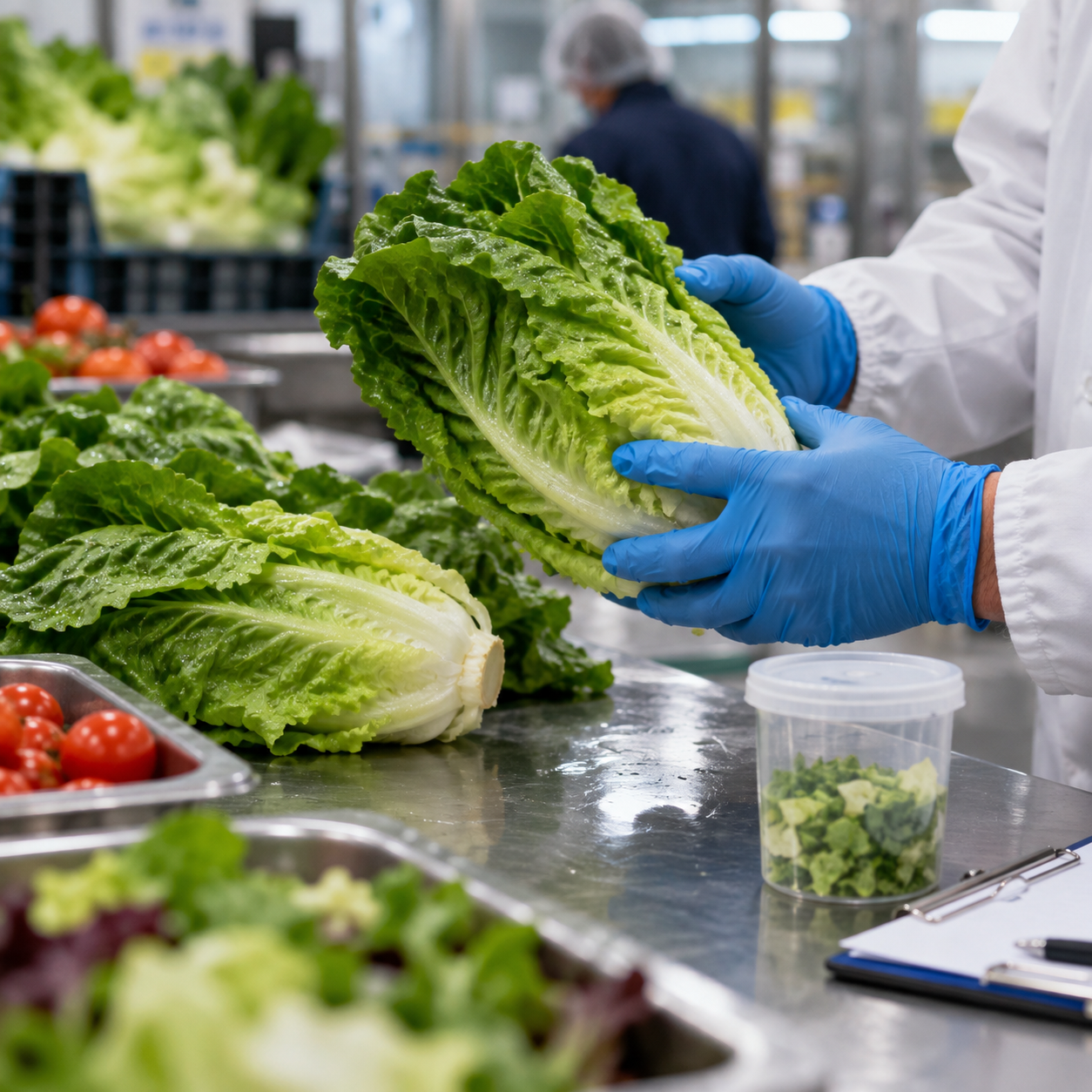
Health officials still do not know exactly how the contamination happened.
The outbreak was linked to iceberg lettuce from Taylor Farms de Mexico, with illnesses reported across 21 states. In total, the CDC says 12,883 people were infected, 570 were hospitalized, and two people died. The last reported illness began on August 17.
The outbreak is over, but the investigation isn’t
The CDC declared the outbreak over on September 11 after the number of new cases fell sharply and the recalled lettuce moved out of the food supply.
That means the contaminated products linked to this outbreak should no longer be available in stores or restaurants.
But the FDA is still investigating what went wrong.
Officials have carried out inspections and sample collection at lettuce-growing operations in Mexico, while continuing post-outbreak work intended to determine how Cyclospora entered the supply chain in the first place.
The lettuce was traced back to central Mexico
The investigation eventually centered on iceberg lettuce processed by Taylor Farms de Mexico.
Federal investigators said epidemiological and traceback evidence pointed to processed iceberg lettuce from the company, and Taylor Farms voluntarily recalled implicated lettuce on July 17.
The recalled lettuce had been distributed widely across the United States to consumers, retailers and restaurants.
Some illnesses were initially associated with people who reported eating at Taco Bell, but the investigation later grew to include people exposed to the lettuce through other locations as well.
One early test created confusion
At one point in the investigation, a lettuce sample was reported as testing positive for Cyclospora.
That finding was later reversed.
FDA laboratory experts re-reviewed the result and determined that it should be considered a false positive, meaning there was no confirmed positive lettuce sample from that test.
Importantly, officials said that did not change the broader investigation because the epidemiological and traceback evidence still strongly pointed toward the recalled lettuce.
That distinction is important.
Investigators can sometimes identify a likely food source by examining what sick people ate, where products were distributed, and how those products moved through the supply chain — even when laboratory testing does not provide a simple positive sample.
What exactly is Cyclospora?
Cyclospora is a microscopic parasite that can cause an intestinal illness known as cyclosporiasis.
Common symptoms can include:
- frequent watery diarrhea
- stomach cramps
- bloating
- nausea
- fatigue
- loss of appetite
- weight loss
Symptoms can last for days or even weeks and may return after appearing to improve.
The parasite is typically spread when food or water becomes contaminated with fecal material containing Cyclospora. That is one reason investigators are particularly interested in areas such as water quality, sanitation, harvesting and processing when trying to determine how an outbreak began.
This outbreak was unusually large
The scale of this event is what made it particularly significant.
Nearly 13,000 confirmed illnesses were tied to this one outbreak, making it the largest recorded multistate Cyclospora outbreak in the country.
The lettuce-linked cases were also only part of a much broader rise in Cyclospora infections reported across the U.S. during 2026.
The CDC has said it has been investigating additional Cyclospora illnesses and outbreaks that are not connected to the Taylor Farms lettuce outbreak.
So although this specific outbreak has ended, Cyclospora itself has not disappeared as a food-safety concern.
Why officials still want to know how it happened
Finding the contaminated product solves only part of the problem.
Investigators also want to determine where the parasite entered the production process.
Possible points of contamination can include irrigation water, agricultural conditions, harvesting practices, processing equipment or sanitation problems.
But identifying the exact moment contamination occurred can be difficult — especially with fresh produce that has a short shelf life and may have already been eaten or discarded by the time investigators arrive.
The FDA says it is continuing its investigation and shifting into prevention-oriented work aimed at reducing the chances of a similar outbreak happening again.
Is there still a risk from the recalled lettuce?
According to the CDC, no.
The best-by dates for the recalled products have passed, and the contaminated lettuce linked to this outbreak is no longer expected to be available in stores or restaurants.
Consumers therefore do not need to avoid all iceberg lettuce because of this specific outbreak.
The recall applied to the implicated products, not iceberg lettuce generally.
The bottom line
The outbreak itself is over.
The contaminated lettuce has left the market, new infections linked to the event have dropped, and officials have closed the active public-health phase of the response.
But the investigation has not completely ended.
After 12,883 illnesses, 570 hospitalizations and two deaths, investigators still want to know exactly how the parasite entered the lettuce supply chain — because answering that question could help prevent the next outbreak.
Marta Visser
Consumer editor
Marta has covered retail pricing and consumer rights for nine years and runs our basket-tracking tests.
One email a week. Every deal, checked.
No spam, no filler. Just the prices, recalls and stories that affect your week.