
Nearly 5 Tons of Explosives Became Too Dangerous to Move — So the Army Will Blow Them Up Next to a Tiny Iowa Town
Families near Middletown’s city park are being told to leave home on Friday, a lead-dust plume could drift toward cities miles away, and the reason nobody can touch the barrels comes down to something that quietly dried up underground.
19 November 2026 · 5 min read
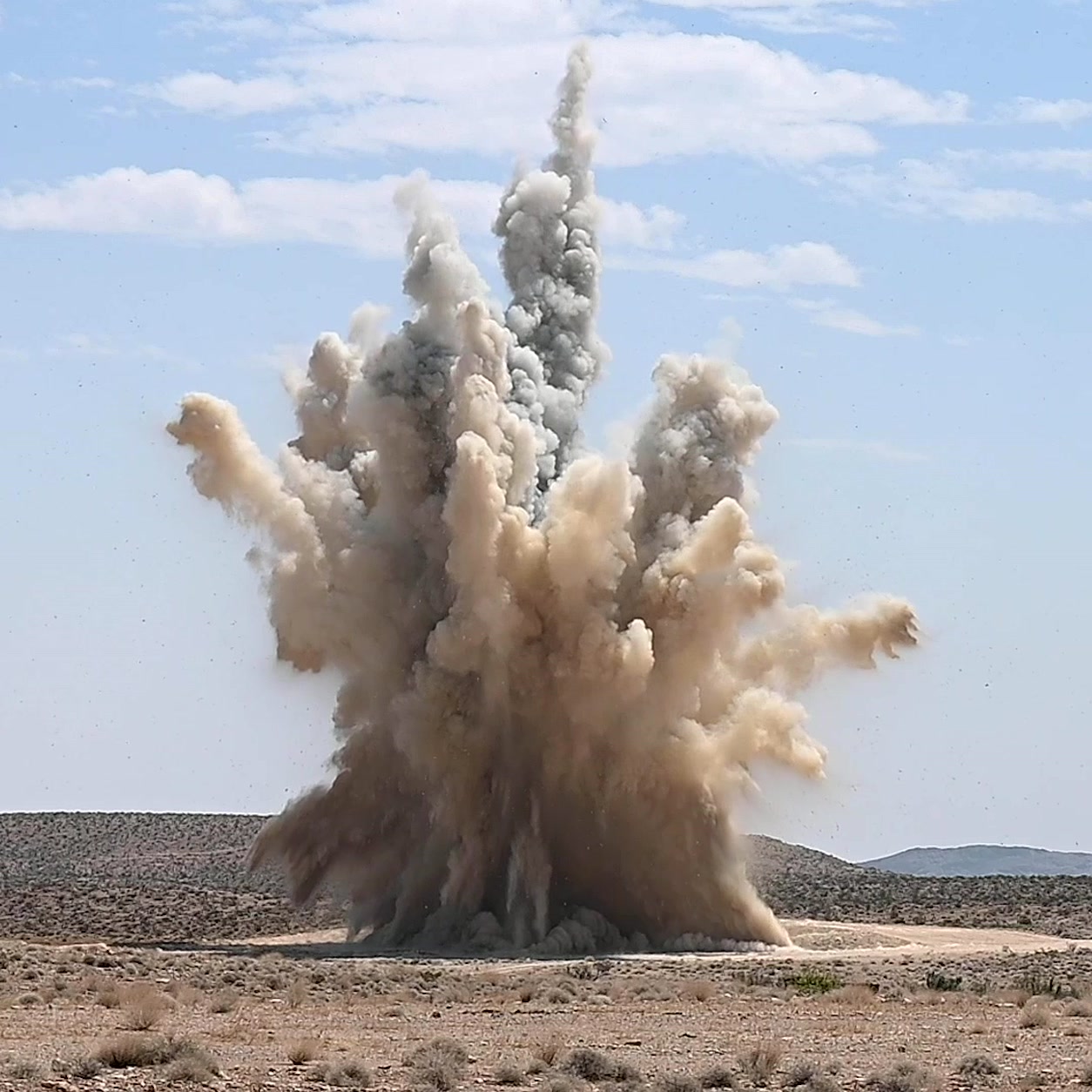
Almost every day, the people of Middletown, Iowa, hear a thud roll in from the ammunition plant next door. Eric Gerst, the town’s former mayor, lives about 5,000 feet from the blast site. He told Iowa Starting Line it sounds like a large gun going off — “nothing earth-shattering.” His mini-goldendoodle, Jarvis, still gets “awful nervous.”
Friday will be different.
Around midday on November 20, U.S. Army bomb experts plan to set off two rapid, back-to-back detonations at the Iowa Army Ammunition Plant. The target: 68 barrels of lead azide, about 9,700 pounds of a compound the military uses to trigger other explosives, according to Army Sustainment Command spokesperson Justine Barati. Families in one corner of town are being asked to leave home for the day. People in towns miles away are being told to shut their windows.
The Army says it has no better choice. The reason starts with something that quietly disappeared inside two concrete bunkers.
“I Want It Gone”
Middletown, home to fewer than 400 people near the Iowa-Illinois border, has lived beside the sprawling plant for generations. Residents have known about Friday’s plan for months; nearly 200 people packed an Army open house about it in October.
Daren Morris, who worked at the plant in 1991 and still has family there, walks his dog past it every day. He plans to leave with his parents on Friday, and his first worry is his house.
“Hopefully I don’t have any broken windows. I just had the roof replaced,” he told KCRG.
His second worry is the one he can’t see. “I don’t know if I would mow the grass for the first time until it rained good,” he said. “You don’t want to kick up all that dust … well, lead is obviously toxic.” He told KCCI that he and his girlfriend have respirators.
Gerst will take Jarvis and his youngest daughter to Iowa City until the afternoon. He isn’t personally worried, he said, and the Army has told residents a controlled blast is the only viable way to deal with the material. “I want it gone,” he told Iowa Starting Line.
The Bath That Dried Up
Lead azide is the primary explosive used to set off munitions, and the Army once kept bulk supplies at the plant to load into fuses and detonators. When the military moved away from the compound, about 20 years’ worth stayed behind in two reinforced, earth-covered “igloo” bunkers, Barati told Snopes.
It was meant to sit safely in a liquid bath. In March, a routine inspection found the ethanol-and-water solution had evaporated, Barati told Iowa Starting Line, leaving extremely volatile crystals behind.
The U.S. Environmental Protection Agency, which permitted Friday’s operation, put the danger bluntly: the “recrystallization of the stored lead azide has increased the material’s sensitivity to friction and shock, and disturbing the containers of lead azide could create an unacceptable risk of unintentional detonation.”
In other words, nobody can load those barrels onto a truck. Destroying the material where it sits is “the only responsible option,” the Army said. Barati now calls it an “emergency operation.” If the Army did nothing, she told Iowa Starting Line, “something could happen which could cause it to detonate on its own.”
The Map That Shocked Eastern Iowa
For the rest of the region, the news landed on Sunday, when the Army released its first map of where the wind could carry dust from the blast — five days before the detonation, which Barati said meets the EPA’s notice requirement.
That model showed lead-containing dust drifting through a corridor between Iowa City, Cedar Rapids, Clinton and Davenport, and as far north as Maquoketa, Iowa Starting Line reported. Wednesday night’s update shifted it: surface dust could pass through Morning Sun and just outside Wapello, while airborne lead could drift past Muscatine and possibly east of Cedar Rapids, according to The Hawk Eye. The maps will keep changing with the wind.
“I understand that it’s shocking to the people that we haven’t told before,” Barati said. “It’s not shocking to the Middletown area because we knew they were in the potential area of impact all along.”
The Army insists the risk is limited. Its modeling predicts airborne lead “may be elevated but well below the level at which EPA would require protective actions,” and the plume should linger no more than an hour. The barrels sit in earth-covered concrete bunkers ringed by sand-filled barriers about two stories high, and crews will soak the soil and run water misters during the blast.
Not everyone is convinced. On Wednesday, protesters at the Armed Forces Reserve Center demanded a halt, independent experts and a free cleanup. “What are going to be the effects of lead floating through the air, landing on things, breathing it in?” organizer Jill Holler asked KCCI.
The stakes are real. The World Health Organization says no level of lead exposure is known to be safe, and the CDC warns it can damage children’s brains and nervous systems.
What Residents Need to Know
- When: Two rapid detonations between about 11 a.m. and noon local time on Friday, November 20. Short siren blasts sound five minutes out; a sustained siren means one minute remains, WQAD reported.
- Who should leave: Residents near Middletown City Park and Butterfly Park, from 8 a.m. to 2 p.m., because vibrations could crack windows.
- Where to go: The Armed Forces Reserve Center, 16815 DMC Highway 34, Middletown. Pets are welcome in carriers or on leashes.
- Everyone in the plume area: Stay indoors, keep windows and doors closed, set heating and cooling to “recirculate” if safe, and avoid unnecessary travel through affected areas.
- Afterward: Once the Army says the exposure period is over, wet-clean play equipment, outdoor furniture, railings and windowsills, and consider washing an outdoor-parked car at a car wash.
- Updates: New plume forecasts at 6 a.m. Friday and hourly until the blast at army.mil/asc. An initial all-clear is expected between 1:30 and 2 p.m., weather permitting.
Some nearby school districts have canceled classes, and anyone whose property is damaged can file a claim with the Army.
Don’t Expect a Fireball
Officials told WQAD not to expect a “massive Hollywood fireball.” Lead azide produces a supersonic shock wave rather than a burning blast, so onlookers should see a sharp, brief flash, then a column of steam and dust.
The plant knows what an accident looks like. It opened in 1940 as the Iowa Ordnance Plant and loaded artillery shells, tank rounds and demolition charges through World War II, Korea, Vietnam and the Cold War, Barati told Snopes. On December 12, 1941, five days after Pearl Harbor, a major explosion tore through the site; photos in the National Archives show debris hurled about 350 feet.
Eighty-five years later, the Army wants the next big blast to be one it chose. If everything goes to plan, Middletown will hear one more thud on Friday, louder than usual. Then the town will wait for the dust to settle — and for the test results to show where it landed.
Marta Visser
Consumer editor
Marta has covered retail pricing and consumer rights for nine years and runs our basket-tracking tests.
One email a week. Every deal, checked.
No spam, no filler. Just the prices, recalls and stories that affect your week.