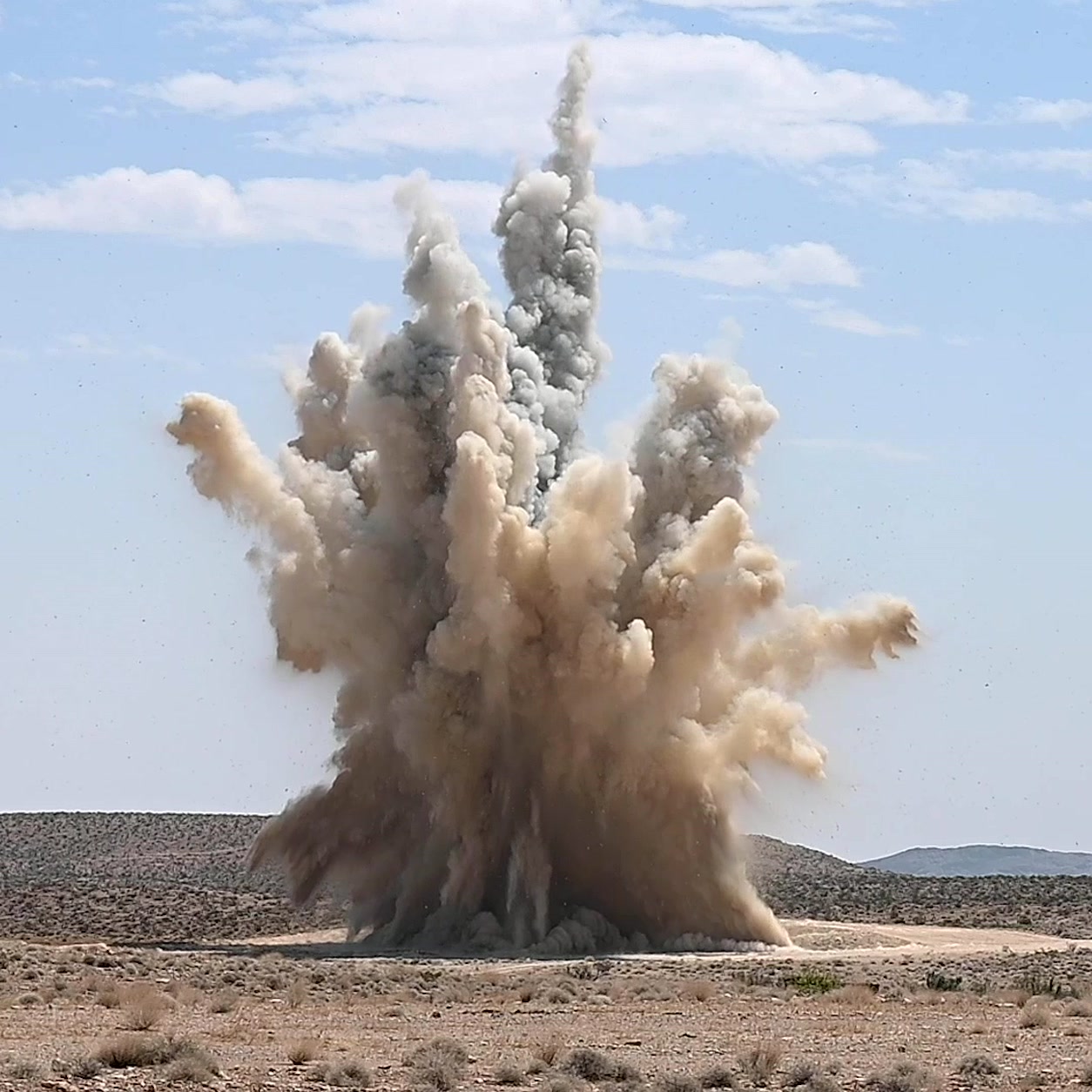
A Court Froze the Army’s 5-Ton Iowa Blast — Then Government Lawyers Said It Might Not Need Permission
One sentence from a judge was supposed to buy Iowa time. Now a line buried in a federal filing, a “Monday or Tuesday” warning and an Army spokesperson’s advice about a garden hose have families downwind asking who is really in charge.
21 November 2026 · 6 min read

The update landed on the City of Fort Madison’s website at 11:50 a.m. on Saturday, tucked into a news page most residents had probably never visited before this week.
It was four sentences long. The city had been told that the Iowa Army Ammunition Plant would “most likely” blow up its stockpile of lead azide “either on Monday, November 23rd or Tuesday, November 24th.” If it didn’t happen this week, the city added, “another time will need to be arranged.” And then, almost as an afterthought: “The court order is still in place at this time.”
Read that again. A federal appeals court has frozen the permit the Army needs for the blast. Yet a town just down the road is being told to brace for Monday or Tuesday anyway.
The gap between those two facts is where thousands of families in southeast Iowa and western Illinois are living this weekend — and it opened because of a single line in a government court filing that most people never saw.
The Sentence Buried at the Bottom of the Filing
To understand why, rewind to late Thursday night. The 8th U.S. Circuit Court of Appeals issued a one-sentence administrative stay, pausing the emergency permit the Environmental Protection Agency had granted the Army on Nov. 13 to detonate 68 drums of degraded lead azide in place. The stay lasts until the court rules on a request from the Iowa Environmental Council and the Sierra Club’s Iowa Chapter, represented by Earthjustice, to keep the permit on hold while their lawsuit plays out.
On Friday, Justice Department lawyers answered on the EPA’s behalf, saying they would fight the groups’ motion. Then, at the very end, came the line that changed the weekend.
“In qualifying emergency situations,” the filing said, EPA regulations authorize the Army — “which is not a party to this petition for review” — “to implement waste treatment activity without an EPA permit” when it determines there is “an immediate threat to human health, public safety, property, or the environment.”
In plain English: the court froze the permit, but the government is suggesting the Army may not need one.
The notice did not say the Army would actually do it. An Army Sustainment Command spokesperson did not respond on Friday when asked, the Iowa Capital Dispatch reported, and KCRG said its repeated calls to the Army went unanswered.
“An Extraordinary and Extreme Backstop”
The groups suing over the permit reacted fast. Thien Chau, a senior attorney at Earthjustice, called the emergency provision “an extraordinary and extreme backstop” and said the groups “strongly urge” the Army not to rely on it, according to Fortune. Cody Smith of the Iowa Environmental Council said detonating without the court’s approval would be unlawful.
“This lawsuit is largely the outcome of a last resort,” Smith said.
The Army’s side of the story is just as urgent, and it is the reason this fight is so hard to call. The 68 drums of lead azide, an explosive used to set off munitions, sat on site for more than 20 years in a bath of ethanol and water. The Army says the material has degraded and recrystallized, leaving it highly sensitive to friction and shock. Its environmental assessment considered neutralizing it chemically, but concluded that the 7 to 22 days of handling required would create an unacceptable risk of a fatal accidental explosion.
Acting Army Secretary Adam Telle has said Monday is the “latest possible moment prior to a forecasted temperature drop, which would risk further destabilization of the material.” To the Army, waiting is the most dangerous choice of all.
EPA regional chief Jim Macy, in a letter to Gov. Kim Reynolds on Friday, said the Army “concluded the only viable option was a controlled detonation in place with extensive mitigation measures.” He added: “All agencies involved are prepared to take the most extreme mitigation measures available to ensure there is no risk to the public and any disruptions are minimized.”
Iowa Stops Waiting for Washington
By Friday evening, the state had stopped waiting for answers. Reynolds activated the State Emergency Operations Center to coordinate state, federal and local agencies ahead of the blast.
She moved after a pointed public plea. The Iowa Emergency Management Association had urged her to go further and issue a proactive disaster emergency proclamation for the counties in the plume’s path. “Limited information from federal officials must not prevent Iowa from taking proactive measures to protect its residents,” the association said, according to KWWL.
Frustration over who knew what, and when, runs through the whole saga. The Army released its detonation date and plume maps on Nov. 15. Reynolds’ office has said neither the governor nor any state agency was told of the plans before that announcement, Little Village reported. Smith said that when his group began calling state and local officials on Nov. 16, “We were telling them for the first time.”
The EPA tells it differently. Macy’s letter says the agency issued three emergency permits for the lead azide between April and September and notified Iowa’s congressional delegation, state lawmakers and local officials each time.
“All They Have to Do Is Hose That Off”
If the legal fight has left people confused, one quote has left many of them furious.
On Nov. 17, Army spokesperson Justine Barati told Radio Iowa that residents worried about lead dust on their property had a simple fix. “The good thing is, if people have concerns about it being on their property, all they have to do is hose that off, and it’s gone,” she said.
The groups suing called that idea “absurd, counterfactual, and extremely harmful misinformation” in their court filings, Fortune reported. Iowa health officials say no safe level of lead exposure has been identified. Macy’s letter says EPA staff have been in Middletown since Nov. 16 testing drinking water and watersheds, and that the EPA and the Army will provide filters to homeowners on public water systems if testing finds elevated lead.
There is another wrinkle. Army maps modeled for the original Friday blast projected lead-laden dust settling across a roughly 25-mile stretch north of the plant. But the Iowa Environmental Council warns that a Monday detonation “includes significant changes in wind direction and speed,” potentially “bringing new communities into the path of the forecasted plume.” The council has asked the Army and EPA to publish new maps immediately.
What Happens Next
The next 48 hours will decide it. Here is where things stand as of Saturday:
- The government says it will file its full response to the court by Sunday.
- The 8th Circuit could rule before Monday. If it sides with the environmental groups, the permit stays frozen while the case continues. If it denies their motion, the pause ends and the Army can proceed under the permit.
- Fort Madison says it has been told the blast will most likely happen Monday, Nov. 23, or Tuesday, Nov. 24 — and that if it doesn’t, it will need to be rescheduled with more planning.
- Whether the Army would invoke the emergency exception if the court rules against it remains an open question.
Back in Fort Madison, the city promised another update “as more information becomes available.” For the families downwind, that may be the most honest sentence anyone has offered all week. Somewhere between a judge’s order and a government lawyer’s footnote sit 68 drums that the Army says are only getting more dangerous — and nobody has yet told Iowa, for certain, what happens to them on Monday.
Should the Army be allowed to go ahead without the court’s blessing? Share your thoughts in the comments.
Marta Visser
Consumer editor
Marta has covered retail pricing and consumer rights for nine years and runs our basket-tracking tests.
One email a week. Every deal, checked.
No spam, no filler. Just the prices, recalls and stories that affect your week.