They Cut the Ribbon on Florida’s Rebuilt Flood Road on Monday — Three Days Later, the Water Came Back for It
Palm Bay called the reopening a victory. Then a second unnamed storm hit the Space Coast, a river did something it hadn’t done since 1953 — and the families who lost everything once are learning the worst may not be over.
21 November 2026 · 5 min read
On Monday morning in Palm Bay, Florida, the mayor stood on a freshly rebuilt stretch of Port Malabar Boulevard and called it a victory. Two weeks earlier, a once-in-a-generation downpour had ripped the road apart. Crews had worked day and night to put it back together. There was a ribbon, there was a congressman, and there were neighbors in the crowd muttering that the whole ceremony was a waste of time.
On Thursday, around 8 a.m., Kip Werner took pictures of the repaired road because his son had asked him to. Within an hour, he told WFTV, “It was coming across the road, and we were in trouble.”
The water had come back. And this time, the road was only the beginning.
What happened on Florida’s Space Coast this week is the kind of disaster that never gets a name. No hurricane, no cone on the weather map, no countdown. Just rain, and then more rain on ground that never had the chance to dry, until a river that has wound past these towns for centuries climbed higher than anyone has ever measured. Now families who thought the worst was behind them are being told the water may not leave for days.
The Morning the Shoulder Gave Way
Rushing water chewed through the shoulder of Port Malabar Boulevard near the Briar Creek intersection until it collapsed, exposing the pipes underneath, WFTV reported. The road was shut in both directions: the same road, washed out for the same reason, less than three weeks apart.
“I saw this three weeks ago, and now I saw it again today and I thought, ‘This is not going to be fun,’” Werner said.
At the reopening on Nov. 16, Mayor Rob Medina had praised the contractor for putting people on the job “day and night,” saying the repair would otherwise have taken months. “We’re celebrating in a sense. It’s actually a victory,” he told WESH. Not everyone was in the mood to celebrate. “It’s a huge waste of everybody’s money and time,” one neighbor said that day. After the second collapse, one resident told FOX 35: “I wanna see a bridge put here.”
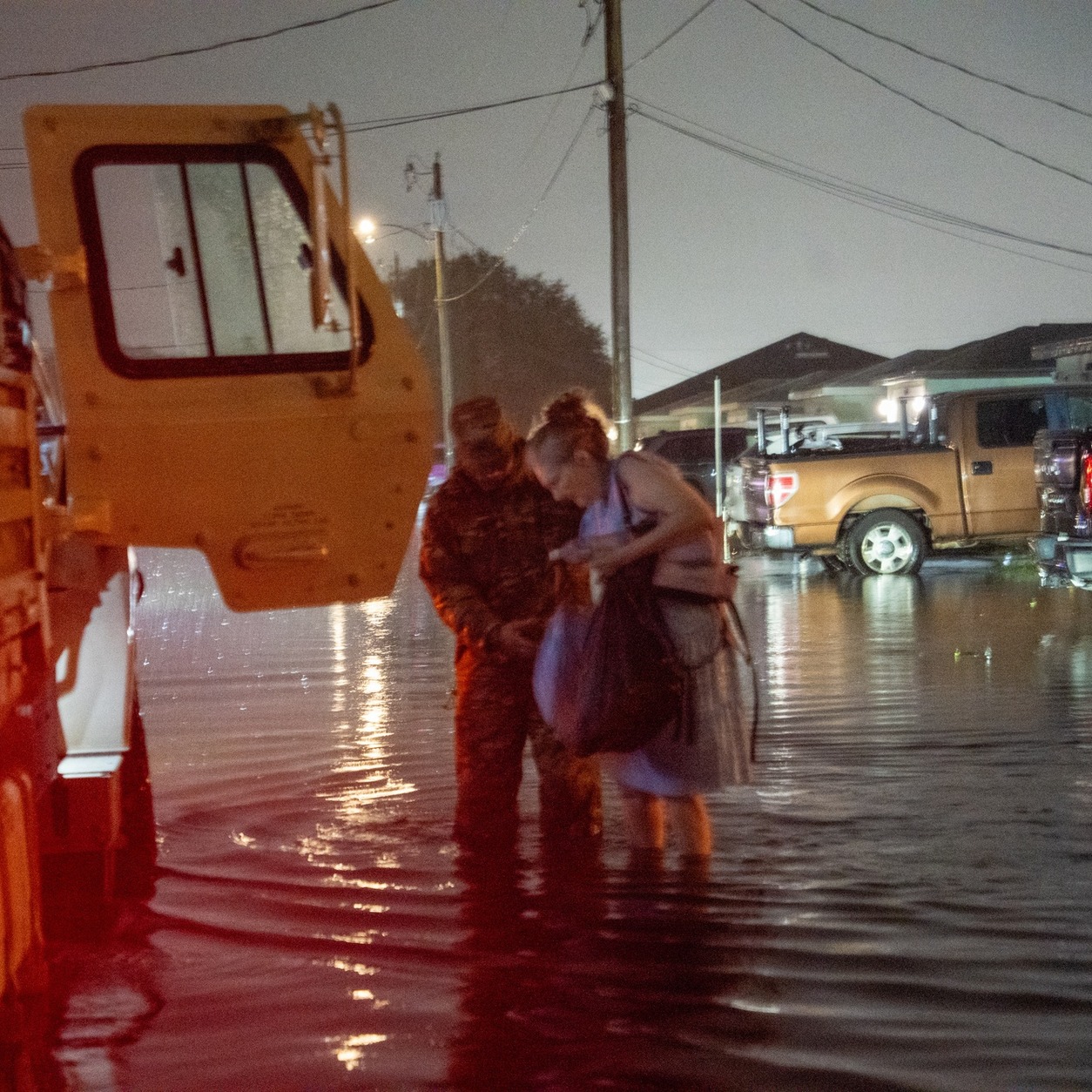
A few miles away, police were knocking on doors in Palm Bay Estates. About 65 homes there had been cut off since the first flood washed away their road. The new water took out the temporary path too, and residents had to be ferried by boat across a canal, Spectrum News reported. “This morning I woke up and there was a policeman outside saying mandatory evacuation, you have to go,” Barbara Mays-Ballou said.
26.9 Inches in Two Days
The numbers coming out of the National Weather Service read like typos. Cape Canaveral recorded 26.9 inches of rain in 48 hours, CBS News reported. Melbourne International Airport logged 5.34 inches on Thursday alone, a record for the date, pushing its November total to 22.59 inches. A normal November there brings 1.63.
In Cocoa, Christine Andrews spent Thursday night on her bed because it was the only thing in the house high enough to stay dry. “I stayed the night, but mostly in my room on my bed, ’cause my bed’s high enough, but everything else is floating in the house,” she told News 6 after rescuers reached her on Friday. Asked what she had lost, she gave a two-word answer: “Everything. Everything.”
Another Brevard County mother woke at 4 a.m. to about eight inches of water in a home that had been dry the night before. “The water was just rushing in at us,” she told News 6. Her young son begged, “Mommy, help me. Get me out of here. Get rid of the water.” Now, she said, “He wants to go back home, but I tell him we don’t have a home no more.”
At Blue Lake Equestrian, a Cocoa boarding barn that also takes in rescue horses, Samantha Maas filmed the pastures underwater at dawn. “You guys, it’s so bad. It’s so bad. We’ve lost everything out here. The horses are just waiting,” she said in the video, according to WESH. Strangers began arriving within 30 minutes. All of the roughly 40 animals — more than 20 horses, plus goats, donkeys and chickens — made it out alive.
A River Nobody Had Ever Seen This High
Then came the number that changed the story.
The St. Johns River near Cocoa had a record that had stood since Oct. 11, 1953: 17.55 feet. This week, it blew straight past it. By Friday morning the gauge read 18.67 feet, and by Friday night the National Weather Service in Melbourne said it had touched 18.8 — more than a foot above a mark that had held for 73 years.
Here is the part that should worry everyone who lives along it: the river isn’t going down. Forecasters expect it to stay near 18.8 feet through the weekend and into early next week, and the weather service warned that rain would keep pushing levels higher “into the weekend, early next week and beyond.”
The reason is simple geography. The St. Johns falls only about an inch per mile as it crawls north, so floodwater drains with agonizing slowness, the St. Johns River Water Management District explained. The district said its reservoirs and canals were holding back roughly 60 billion gallons in the upper basin — water that would otherwise be pouring downstream.
“Sometimes It’s Just Convincing People”
By Friday afternoon, about 120 people had been rescued in Brevard County and well over 150 in Volusia County, the Florida Fish and Wildlife Conservation Commission told News 6. FWC sent roughly 80 officers and 13 airboats into the area alone. Florida National Guard soldiers in high-water trucks joined the rescues in Rockledge and Cocoa, some of them before dawn.
“A lot of folks have been trapped in their house with their pets,” FWC Lt. Grant Eller said. Often the hardest part is the conversation at the front door. “Sometimes it’s just convincing people that they should leave their homes.”
Brevard County Sheriff Wayne Ivey delivered the one piece of news that matters most. “Right now we have absolutely no one that has lost their life from this storm,” he said at a Thursday press conference.
The bills are another story. Gov. Ron DeSantis has expanded his state of emergency to more than 20 counties, from Miami-Dade to Duval. But as of Friday morning, FEMA’s database still showed no federal disaster declaration for this fall’s Brevard flooding, which means no federal individual assistance, 321 Daily reported. The White House has said FEMA is “reviewing” the request for the first flood.
And many of the people losing everything never had flood insurance. “I’m worried to death,” Robert Spinning, whose entire block is underwater, told CBS News. “I don’t have flood insurance. I can’t afford it.”
At the Monday ribbon-cutting, Rep. Mike Haridopolos had explained why help was slow: because the first storm had no name — “literally a flood we’ve never seen before” — the aid request had to go through different channels. Three days later, a second unnamed storm arrived to join it.
Nobody Is Planning a Ribbon
Sunday is expected to bring sunshine. Thanksgiving is days away. But sunshine won’t drain a river that falls an inch a mile, and the forecast keeps the St. Johns near record height into next week, with families who already lost everything once still waiting to find out who will help them start over.
Out on Port Malabar Boulevard, the crews are back where they stood three weeks ago, staring into the same hole in the same road. Nobody has said when it will reopen. This time, nobody is planning a ribbon.
What would you do if the water came back to your street twice in one month? Share your thoughts in the comments.
Marta Visser
Consumer editor
Marta has covered retail pricing and consumer rights for nine years and runs our basket-tracking tests.
One email a week. Every deal, checked.
No spam, no filler. Just the prices, recalls and stories that affect your week.